If you’ve spent any time in agriculture, horticulture, or even home gardening, you’ve probably heard throwaround talk about EC meters. Some swear by them as a silver bullet for perfecting soil health; others write them off as overpriced and unreliable for soil-related measurements. For years, as a supplier of EC meters to small-scale farmers, commercial growers, and even university soil science labs, I’ve fielded the same question at least once a week: “Can an EC meter actually measure soil salinity?” The short answer is yes—but only if you know what the tool is built to do, how to use it right, and what it can (and cannot) tell you about your soil. Let’s break this down, no jargon-filled fluff, just the practical, field-tested insight I’ve gained from working with growers every single day. EC Meter
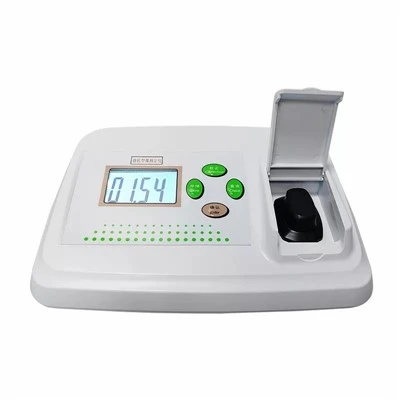
First, let’s get clear on what EC actually stands for. EC is electrical conductivity, a measure of how well a solution conducts an electrical current. Pure water is an insulator—it barely conducts electricity at all. But when you dissolve salts, minerals, or other charged particles (called ions) in water, those particles act like tiny wires, letting current flow. More salts = more ions = higher EC. That’s the core principle, and it’s simple enough. So why does that matter for soil salinity? Salinity is exactly that: the concentration of soluble salts in your soil. Too much salt in soil is a huge problem for plants—it draws water away from roots (osmotic stress) and can damage delicate tissue, stunting growth or even killing crops. For growers, being able to track those salt levels is make-or-break, whether you’re irrigating with water high in natural salts, using too much fertilizer, or dealing with salt buildup from repeated planting in the same bed.
Here’s where things get tricky, though. A lot of new users jump online, grab an EC meter, and stick it straight into dry soil—and immediately get a reading. That reading, though? It’s not an accurate measure of soil salinity. EC meters measure dissolved ions in a liquid solution, not in solid soil. That’s why all valid soil EC measurements require a soil-to-water extraction solution. The two most common methods in agriculture and testing labs are the saturated paste extract (SPE) and the 1:5 dilution. The saturated paste method is the gold standard for accurate salinity readings. Here’s how it works: you mix dry soil with distilled or deionized water until it’s the consistency of a thick, spreadable paste. No standing water on top, no dry clumps. Let it sit for an hour or so to let all the salts dissolve fully, then insert your EC meter’s probe into the extracted pore water from that paste. The EC reading you get here correlates directly to the amount of soluble salt in your soil, and it aligns with the standards agronomists use—anything below 2 dS/m (decisiemens per meter, the standard unit for soil EC) is ideal for most crops, above 4 dS/m is problematic for sensitive plants like lettuce or strawberries, and above 8 dS/m is unsafe for almost all vegetation.
The 1:5 dilution method is more popular for small-scale growers because it’s faster. You mix one part soil with five parts water, stir it up thoroughly, let the solids settle, and then measure the EC of the liquid. This works because it standardizes the amount of water relative to soil, so readings are consistent and comparable between tests. It’s not as precise as the saturated paste, but it’s way simpler for someone testing soil in their backyard or a small farm field. The key takeaway here: an EC meter doesn’t measure salt in dry soil—it measures salt in a water solution pulled from (or mixed with) soil. Use it wrong, and your readings will be off, leading you to overwater, over-fertilize, or waste time on soil that’s not actually saline.
Now, let’s talk about what an EC meter can’t do, because there are a lot of myths out there. First, it can’t tell you what kind of salts are in your soil. Two different types of salt can have the same EC reading. For example, sodium chloride (the common salt you use on sidewalks in winter) has a similar EC to magnesium sulfate (a common fertilizer salt) at the same concentration. Sodium is the big villain in soil salinity because it breaks down soil structure, making it compacted and hard for roots to grow, while magnesium and sulfate are actually beneficial in moderate amounts. So an EC meter will tell you there’s a salt problem, but it won’t tell you which salt is causing it. For that, you’d need a separate lab test that tests for individual ion concentrations. Second, an EC meter can’t tell you about soil health beyond salt levels. It can’t measure organic matter content, nutrient levels (beyond total dissolved ions, which is not the same as available nutrients), or compaction. It’s a salinity tool, not a universal soil test. Third, cheap, no-name EC meters from big-box stores often give inconsistent readings. I’ve had growers send me readings from a $10 meter that were double what a reputable lab got from the same soil sample, just because the probe calibration was off. That’s why, as a supplier, I always emphasize quality over price when it comes to EC meters for soil testing.
Let’s get into a real-world example to make this concrete. Last year, I worked with a small family vegetable farm in central California that was growing heirloom tomatoes. They were having trouble with blossom end rot, which they thought was a calcium deficiency. They were adding tons of calcium fertilizer, but the problem kept getting worse. They called me frustrated, saying their soil EC meter readings were all over the place—some days high, some days low, and none matching what their extension agent told them. I asked them how they were taking readings, and they said they stuck the probe 2 inches into the dry soil after watering, and wrote down whatever the meter said. That’s exactly the mistake I mentioned earlier. I walked them through the saturated paste method, and when they re-tested their soil, they got a consistent EC reading of 5.2 dS/m. That’s moderately saline, and while calcium was low, the real issue was excess salt from overwatering and over-fertilization that was blocking the plants’ ability to take up calcium, not a lack of calcium in the soil. Once they adjusted their irrigation and cut back on the fertilizer, their tomato yield went up 30% that season, and blossom end rot almost disappeared. That’s the power of a correctly used EC meter—it’s not a toy, it’s a diagnostic tool.
Another common use case: greenhouse growers. Greenhouses have closed irrigation systems, so salts build up quickly in soil or growing medium because water evaporates and leaves salts behind. A commercial greenhouse can lose thousands of dollars in a single crop if salt levels get too high. I supply EC meters to several mid-sized greenhouses in the Pacific Northwest, and they use them to test irrigation water every week, test the growing medium’s saturated paste extract every two weeks, and adjust fertilizer rates accordingly. One greenhouse told me that switching to calibrated, consistent EC meters cut their fertilizer costs by 18% last year, because they stopped over-applying fertilizer when salt levels were already high. That’s a huge win, and it’s all because they were using EC meters correctly for soil salinity testing.
Now, let’s address a common pushback: “Why not just send soil samples to a lab?” Labs are great for full soil tests, but they’re expensive and slow. A lab test can take a week or more, and costs $20-$50 per sample. An EC meter gives you a reading in 10 minutes, for pennies on the dollar. For large farms with hundreds of acres, or a greenhouse with thousands of plants, being able to test on-site multiple times a week is invaluable. You can catch salt buildup before it becomes a problem, adjust irrigation or fertilizer rates in real time, and save money and crops. The tradeoff is that you have to learn how to use the meter correctly, and understand the difference between the saturated paste and dilution methods, and what readings mean for your specific crops.
A few pro tips I’ve picked up over the years to get accurate soil salinity readings with an EC meter, straight from the field: First, calibrate your meter every few months, or before a big test. Most meters come with a calibration solution (usually 1.41 or 12.88 dS/m for standard solutions) and a simple calibration function. Even a small calibration error can throw off your soil readings by 10-20%. Second, use distilled or deionized water for your extractions. Tap water has its own EC level, which will skew your soil reading. I’ve seen growers use hose water and get readings 1-2 dS/m higher than actual salinity, just because their tap water is moderately saline. Third, collect soil samples from multiple spots in the field or bed. Soil salinity isn’t uniform—low spots where water pools tend to have higher salt levels, while high spots drain better and have lower levels. Collect 5-10 small cores from across the area, mix them together, and test that composite sample for the most accurate reading. Fourth, match your test method to your needs. If you’re a small gardener or hobby farmer, the 1:5 dilution is fine for tracking changes over time. If you’re growing high-value crops like berries or specialty vegetables, use the saturated paste method for lab-aligned accuracy.
As an EC meter supplier, one of the most important things I do is not just sell the meters, but teach customers how to use them correctly. I’ve had too many people buy a cheap meter, misuse it, and then say EC meters are useless. That’s like buying a tape measure, holding it crooked, and saying it can’t measure length. The tool works, but you have to use it right. If you’re new to soil salinity testing, start with a simple 1:5 dilution test, keep a log of your readings, and cross-reference with a lab test once a year to make sure your meter is calibrated and your methods are on track.

So to circle back to the original question: Can an EC meter measure soil salinity? Absolutely—when used for what it’s designed for, with the correct method, calibrated properly, and paired with basic agronomic knowledge. It’s not a magic device, but it’s one of the most cost-effective tools you can add to your soil testing toolkit, whether you’re a backyard gardener or a large commercial grower. If you’re ready to invest in a reliable EC meter for your soil testing needs, or you have questions about which model works best for your crops, don’t hesitate to reach out. We’re here to help you get accurate readings, troubleshoot salt issues, and make the most of your soil.
Sterilizer References
- Mikkelsen, R. L. (2018). Electrical Conductivity as a Measure of Soil Salinity. University of California Agriculture and Natural Resources.
- U.S. Salinity Laboratory Staff. (1954). Diagnosis and Improvement of Saline and Alkali Soils. U.S. Department of Agriculture Handbook No. 60.
- Grattan, S. R., & Grieve, C. M. (1999). Salinity-Mineral Nutrition Interactions in Crop Plants. Horticultural Reviews, Vol. 23.
- USDA Natural Resources Conservation Service. (2021). Soil Salinity Testing Guidelines. NRCS Soil Health Technical Note No. 408.
Hangzhou Qiwei Instrument Co., Ltd.
Hangzhou Qiwei Instrument Co., Ltd. is one of the most reliable manufacturers and suppliers of ec meter in China, featured by quality products and good service. Please rest assured to buy bulk durable ec meter in stock here from our factory. We also accept customized orders.
Address: Room 101, Building 25, No. 488-1, Donghu North Road, Linping District, Hangzhou City, Zhejiang Province, China
E-mail: info@qiweilab.com
WebSite: https://www.qiweilab.com/
