Hey everyone, it’s Jake here from the gantry machining center team, and I get asked this question all the time: “Why go with a gantry machine when I’ve got a vertical machining center (VMC) or even a horizontal one sitting on the shop floor?” I totally get it—new equipment is a big call, and no one wants to drop cash on something that just works the same as what they already have. But after working with shops of all sizes, from small jobbies to big aerospace factories, I’ve seen first-hand how gantry machining centers aren’t just “another option”—they fix so many of the headaches other machines leave you with. Let me break this down like I would over a coffee in the shop, no fancy jargon, promise. Gantry Machining Center
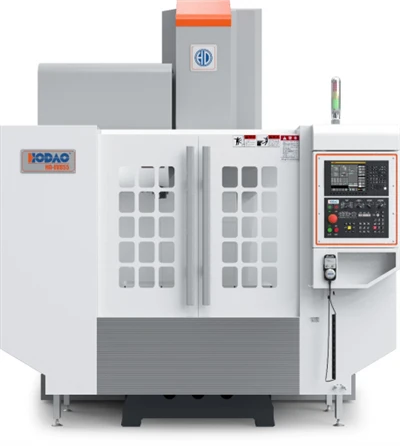
First off, let’s talk about that big thing every shop obsesses over: work capacity. I’ve had guys come in saying, “I need to machine this 12-foot wind turbine blade root, and my VMC only does 4x4s.” Fair. VMCs and horizontal machining centers (HMCs) are built with a moving table and a fixed spindle, right? So if you’ve got a part longer than the table, you’re either fighting with fixturing that’s too tight to clamp it down right, or you’re limiting your cut paths to avoid hitting the machine’s sides. Gantry machines flip that whole layout: the spindle moves along a fixed gantry that spans the entire work area, and the table is fixed in place. That means you can load parts that are way bigger—like 20-foot structural beams, heavy aerospace engine casings, or even whole mold halves for car bumpers—without rearranging half your shop. No more wrestling with custom fixturing that doesn’t work, no more stopping a mid-cut because your part is hitting the machine’s frame. I worked with a defense shop last year that had 16-foot submarine hull segments they couldn’t machine on their old HMCs because they’d bend the table under the weight. They swapped in a gantry, and suddenly they’re cranking out segments 3x faster, no table flex to mess up tolerances. That’s a game-changer.
Next up: rigidity and accuracy. Let’s be real—any machining center is only as good as its rigidity. If your machine twists or vibrates mid-cut, you get scrapped parts, tool wear that’s through the roof, and downtime waiting for repairs. VMCs and HMCs have that moving table that’s hanging off one end sometimes, especially with big parts. The more weight you put on that table, the more it flexes, which throws off your tool path. Gantries? The gantry structure is a solid, steel-framed beast that spans the entire work area. The table stays put, so all the weight of your part is evenly distributed on the floor—no flex, no twist. I’m talking tolerances down to a few thousandths of an inch even when you’re cutting through 6-inch thick titanium. That’s huge for industries like aerospace, medical, or mold-making where even a 0.001-inch error means a part gets tossed. I had a mold maker complain last month that their old VMC was leaving consistent lines on their 10-foot injection mold halves because the table vibrated during deep cuts. They tried everything—tool holders, cutting speeds, even a vibration dampener—but nothing worked until they switched to a gantry. Now their mold finish is smooth enough to pass inspection on the first try, no rework. That saves them hours of downtime and scrap costs every month.
Then there’s productivity, and let’s face it—every shop is chasing more parts, faster, without sacrificing quality. Gantries kill it here because of their versatility in tooling and multi-tasking. A lot of VMCs only have 20 or 30 tool changers, right? So if you’re machining a big part that needs end mills, drills, reamers, and even tapers, you’re stopping every 5 minutes to change tools. Gantry machining centers can have tool changers with 100, 150, even 200 tools—all right there, no waiting. Some even have multi-spindle heads, so you can do multiple operations at once. Like, drill a hole and tap it at the same time, or rough cut and finish cut in one pass. I worked with a job shop that does heavy equipment parts—they were taking 12 hours to machine a single bulldozer frame on their old HMC. On our gantry, they do it in 4 hours. Why? They loaded 80 tools for the different steps, and the multi-spindle head runs two cuts at once. That’s not just faster cutting—it’s less setup time, less downtime for tool changes, more parts out the door each week. Also, gantries can run 24/7 if you need them, because there’s no moving table to worry about—you just load a big part, hit go, and the machine runs all night. No one wants to leave a $50,000 part unattended, but with a rigid, stable gantry, it’s way less risky than a smaller machine that might shift mid-night.
Wait, let’s not forget about operator safety and ease of use. I’ve seen guys climb on top of VMC tables to clamp big parts because the table is so low to the ground. That’s a tripping hazard, not to mention if the table moves while you’re on it, you get hurt. Gantry tables are often at waist height or higher, so you can load and unload parts without climbing. Also, the control systems on modern gantries are way more intuitive than they used to be. A lot of them sync with CAD/CAM software, so you can upload your part design, set up the tool path, and the machine adjusts on its own. No more manually inputting coordinates that cause errors. I had a new operator at a construction supply shop tell me last month that he was able to run the gantry his first day, whereas it took him a week to get up to speed on their old HMC because the controls were clunky. That translates to less training time, fewer operator errors, and a safer shop overall.
Now, let’s be real—no machine is perfect, but compared to other options, gantries solve way more pain points. VMCs are great for small parts, but they fall apart when you need size or heavy cuts. HMCs are better than VMCs for mid-size parts, but still limited by the table size and rigidity. Gantries? They handle the big, heavy, precision stuff that no other machine can touch. I’ve worked with shops that tried to “adapt” their existing VMCs for big parts by adding extensions, but that just created more flex and accuracy issues. It’s like trying to fit a square peg in a round hole—you’re just going to damage something.
Here’s the thing: I’m not here to tell you to toss all your other machines. A good shop mix is key—you need VMCs for small, high-volume parts, HMCs for mid-size stuff, and gantries for that specialized, big-ticket work that makes you stand out from competitors. I’ve seen shops that added a gantry and suddenly won big contracts because they could do parts their competitors couldn’t even quote on. Last year, a wind energy client told us that a competitor couldn’t bid on a 25-foot turbine hub because their machines couldn’t handle the size and rigidity. They bought our gantry, and that contract doubled their annual revenue. That’s the kind of impact this stuff has.
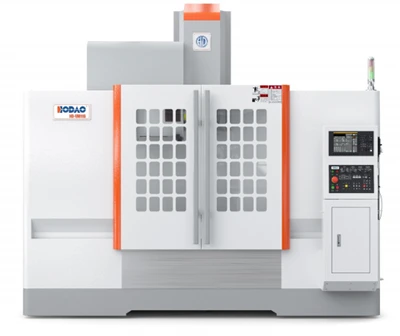
If you’re sitting there thinking, “Yeah, my shop could use something like that, but I’m not sure where to start,” let’s chat. We don’t push one-size-fits-all machines—we work with your shop, your parts, your needs, to find a gantry that fits, not the other way around. Whether you need a small gantry for mid-size molds or a full-scale industrial one for aerospace or energy parts, we can break down the cost, the payback time, and how it’ll fit into your existing workflow. No hard sells, no fine print—just straight talk about how a gantry machining center can make your shop run better, faster, and more profitably. Drop us a line to set up a demo or talk through your needs, and let’s figure it out together.
Profile Machine References
ASM International. (2017). Machining Fundamentals: Rigidity and Accuracy in CNC Manufacturing. Society of Manufacturing Engineers.
Design World. (2022). Gantry Machining Centers: The Go-To Solution for Large-Part Manufacturing. Endeavor Business Media.
Nelson, T. (2021). Comparative Analysis of CNC Machining Center Performance for Large-Scale Industrial Parts. Journal of Manufacturing Processes.
Taizhou Qiyang Trading Co., Ltd.
As one of the most professional gantry machining center manufacturers and suppliers in China, we’re featured by quality products and good price. Please rest assured to buy bulk gantry machining center for sale here and get quotation from our factory. Customized orders are welcome.
Address: Zhenhai Village, Binhai Town, Wenling City, Taizhou City, Zhejiang Province
E-mail: qycncmachine@outlook.com
WebSite: https://www.qycncmachine.com/
