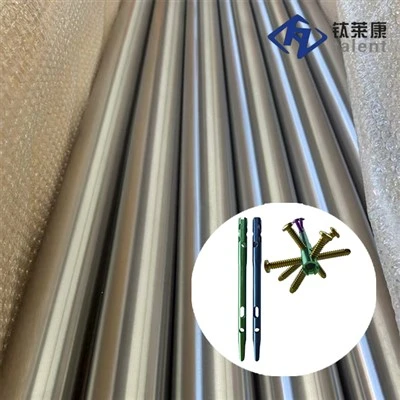
As a seasoned supplier of titanium bars, I’ve witnessed firsthand the critical role these materials play in various industries, from aerospace and automotive to medical and marine applications. One of the most common questions I receive from customers is how to increase the strength of titanium bars. In this blog post, I’ll share some insights and strategies based on my years of experience in the industry. Titanium Bars
Understanding Titanium’s Unique Properties
Before delving into the methods of enhancing titanium bar strength, it’s essential to understand the unique properties of titanium. Titanium is a lightweight, high-strength metal known for its excellent corrosion resistance, biocompatibility, and high melting point. These properties make it an ideal choice for applications where strength, durability, and reliability are crucial.
However, titanium’s strength can vary depending on several factors, including its alloy composition, manufacturing process, and heat treatment. By understanding these factors, we can implement strategies to optimize the strength of titanium bars for specific applications.
Alloy Selection
One of the most effective ways to increase the strength of titanium bars is through alloying. Titanium alloys are created by adding other elements to pure titanium, such as aluminum, vanadium, molybdenum, and zirconium, to enhance its mechanical properties.
- Alpha Alloys: These alloys contain alpha stabilizers such as aluminum and tin, which improve strength and creep resistance at elevated temperatures. Alpha alloys are typically used in applications where high-temperature strength and corrosion resistance are required, such as in aerospace engines and chemical processing equipment.
- Beta Alloys: Beta alloys contain beta stabilizers such as vanadium, molybdenum, and niobium, which provide high strength, ductility, and formability. Beta alloys are often used in applications where high strength-to-weight ratio and excellent fatigue resistance are needed, such as in aircraft structures and sports equipment.
- Alpha-Beta Alloys: These alloys are a combination of alpha and beta phases, offering a balance of strength, ductility, and corrosion resistance. Alpha-beta alloys are the most widely used titanium alloys and are suitable for a variety of applications, including aerospace, automotive, and medical industries.
By carefully selecting the appropriate titanium alloy based on the specific requirements of the application, we can significantly enhance the strength and performance of titanium bars.
Manufacturing Process
The manufacturing process also plays a crucial role in determining the strength of titanium bars. The following manufacturing techniques can be used to improve the strength of titanium bars:
- Hot Rolling: Hot rolling is a common manufacturing process used to produce titanium bars. During hot rolling, the titanium billet is heated to a high temperature and passed through a series of rolling mills to reduce its cross-sectional area and increase its length. Hot rolling helps to refine the grain structure of the titanium, improving its strength and ductility.
- Cold Drawing: Cold drawing is another manufacturing process used to produce titanium bars. In cold drawing, the titanium bar is pulled through a die at room temperature to reduce its diameter and increase its length. Cold drawing can further refine the grain structure of the titanium, resulting in improved strength and hardness.
- Extrusion: Extrusion is a manufacturing process in which the titanium billet is forced through a die to produce a bar of a specific shape and size. Extrusion can be used to produce complex shapes and profiles with high strength and dimensional accuracy.
By optimizing the manufacturing process, we can ensure that the titanium bars have the desired strength and mechanical properties.
Heat Treatment
Heat treatment is a critical step in enhancing the strength of titanium bars. Heat treatment involves heating the titanium bars to a specific temperature and then cooling them at a controlled rate to achieve the desired microstructure and mechanical properties.
- Annealing: Annealing is a heat treatment process used to relieve stress, improve ductility, and reduce hardness in titanium bars. During annealing, the titanium bars are heated to a temperature below the critical point and then cooled slowly in the furnace. Annealing helps to refine the grain structure of the titanium, improving its strength and toughness.
- Solution Treatment: Solution treatment is a heat treatment process used to dissolve the alloying elements in the titanium matrix and form a homogeneous solid solution. During solution treatment, the titanium bars are heated to a high temperature and then quenched rapidly in water or oil to retain the alloying elements in solid solution. Solution treatment helps to improve the strength and corrosion resistance of the titanium bars.
- Aging: Aging is a heat treatment process used to precipitate the alloying elements from the solid solution and form a fine dispersion of precipitates in the titanium matrix. During aging, the titanium bars are heated to a lower temperature and held for a specific period of time to allow the precipitates to form. Aging helps to further improve the strength and hardness of the titanium bars.
By carefully controlling the heat treatment parameters, we can optimize the strength and mechanical properties of the titanium bars for specific applications.
Surface Treatment
Surface treatment is another important factor that can affect the strength of titanium bars. Surface treatment techniques can be used to improve the corrosion resistance, wear resistance, and fatigue resistance of the titanium bars.
- Anodizing: Anodizing is a surface treatment process used to create a protective oxide layer on the surface of the titanium bars. During anodizing, the titanium bars are immersed in an electrolyte solution and an electric current is passed through the solution to form an oxide layer on the surface of the titanium. Anodizing helps to improve the corrosion resistance and wear resistance of the titanium bars.
- Coating: Coating is a surface treatment process used to apply a thin layer of a protective material on the surface of the titanium bars. Coatings can be made of various materials, such as ceramic, polymer, or metal, and can provide different properties, such as corrosion resistance, wear resistance, and lubrication. Coating helps to improve the performance and durability of the titanium bars.
- Shot Peening: Shot peening is a surface treatment process used to introduce compressive stresses on the surface of the titanium bars. During shot peening, small spherical particles are bombarded onto the surface of the titanium bars at high velocity to create compressive stresses. Shot peening helps to improve the fatigue resistance and crack propagation resistance of the titanium bars.
By applying appropriate surface treatment techniques, we can enhance the strength and performance of the titanium bars in harsh environments.
Conclusion
Increasing the strength of titanium bars requires a comprehensive approach that considers alloy selection, manufacturing process, heat treatment, and surface treatment. By carefully choosing the appropriate alloy, optimizing the manufacturing process, controlling the heat treatment parameters, and applying suitable surface treatment techniques, we can significantly enhance the strength and performance of titanium bars for various applications.
Dental Titanium Blocks As a Titanium Bars supplier, I’m committed to providing high-quality titanium bars that meet the specific requirements of our customers. If you’re interested in learning more about our titanium bars or need assistance in selecting the right material for your application, please don’t hesitate to contact us. We look forward to discussing your needs and working with you to find the best solutions.
References
- Boyer, R. R., Welsch, G., & Collings, E. W. (1994). Materials properties handbook: Titanium alloys. ASM International.
- Donachie, M. J., & Donachie, S. J. (2002). Titanium: A technical guide. ASM International.
- Lutjering, G., & Williams, J. C. (2007). Titanium. Springer Science & Business Media.
Baoji Tailaikang High-Tech Metal Materials Co., Ltd.
With abundant experience, we are one of the most professional titanium bars manufacturers and suppliers in China. Please feel free to buy titanium bars for sale here and get pricelist from our factory. For price consultation, contact us.
Address: No. 1, Southeast Cross of Gaoxin Avenue and Fenghuang 3rd Road, High-tech Development Zone, Baoji City, Shaanxi Province, China
E-mail: sale@tlkjs.com
WebSite: https://www.tlkmetal.com/
