Do tantalum products have good thermal conductivity?
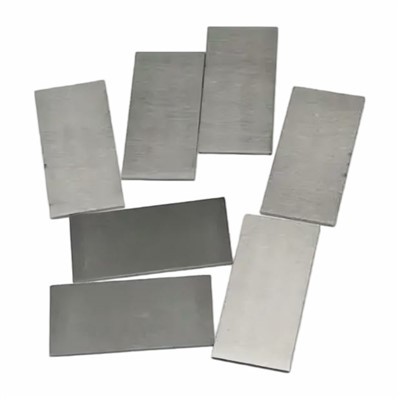
As a supplier of tantalum products, I’ve often been asked about the thermal conductivity of tantalum. It’s a crucial property, especially in applications where heat management is essential. In this blog, I’ll delve into the thermal conductivity of tantalum products, explore its implications in various industries, and share insights from my experience in the field. Tantalum Products
Understanding Thermal Conductivity
Before we discuss tantalum’s thermal conductivity, let’s briefly understand what thermal conductivity is. Thermal conductivity is a measure of a material’s ability to conduct heat. It is defined as the quantity of heat that passes through a unit cube of the material in one second when the difference in temperature between its two faces is one degree Celsius. Materials with high thermal conductivity can transfer heat quickly, while those with low thermal conductivity are better insulators.
Tantalum’s Thermal Conductivity
Tantalum (Ta) is a refractory metal known for its excellent corrosion resistance, high melting point, and good ductility. In terms of thermal conductivity, tantalum has a relatively high value. At room temperature (around 25°C), the thermal conductivity of pure tantalum is approximately 57 W/(m·K) [1]. This value is comparable to other metals like nickel (90.7 W/(m·K)) and cobalt (100 W/(m·K)) and is significantly higher than many non – metallic materials.
The high thermal conductivity of tantalum can be attributed to its atomic structure. Tantalum has a body – centered cubic (BCC) crystal structure. In this structure, the atoms are arranged in a way that allows for efficient transfer of thermal energy through lattice vibrations (phonons) and the movement of free electrons. The free electrons in the metal act as carriers of heat, similar to their role in conducting electricity.
Applications Enabled by Tantalum’s High Thermal Conductivity
Electronics Industry
In the electronics industry, heat dissipation is a critical issue. As electronic devices become more powerful, the amount of heat generated by components such as integrated circuits (ICs) and power transistors increases significantly. Tantalum products, such as tantalum capacitors, are used in many electronic circuits. Their high thermal conductivity helps in dissipating the heat generated during operation, preventing overheating and ensuring the reliability and longevity of the electronic devices.
For example, in high – performance computing systems, the central processing units (CPUs) generate a large amount of heat. Tantalum heat sinks can be used to transfer the heat away from the CPU to the surrounding environment. The high thermal conductivity of tantalum allows for efficient heat transfer, reducing the temperature of the CPU and improving its performance.
Aerospace and Defense
The aerospace and defense sectors demand materials that can withstand extreme conditions and provide efficient heat management. Tantalum alloys are used in aircraft engines, missile components, and other high – temperature applications. The high thermal conductivity of tantalum helps in maintaining the structural integrity of these components by ensuring that the heat is evenly distributed and dissipated.
In jet engines, for instance, hot gases can reach very high temperatures. Tantalum – based components can effectively transfer the heat, preventing localized overheating and potential damage to the engine. This property is crucial for the safety and reliable operation of aircraft and defense systems.
Chemical Processing
In the chemical processing industry, many reactions are exothermic, meaning they release heat. Tantalum’s corrosion resistance and high thermal conductivity make it an ideal material for heat exchangers. Heat exchangers are used to transfer heat between two fluids without mixing them. Tantalum heat exchangers can efficiently transfer the heat generated during chemical reactions, controlling the reaction temperature and improving the overall efficiency of the process.
Factors Affecting Tantalum’s Thermal Conductivity
While tantalum has good thermal conductivity, several factors can affect this property.
Alloying
When tantalum is alloyed with other elements, its thermal conductivity can change. For example, adding small amounts of elements like tungsten or hafnium to tantalum can increase its strength and hardness but may slightly reduce its thermal conductivity. The alloying elements can disrupt the atomic structure of tantalum, interfering with the movement of phonons and free electrons, which are responsible for heat conduction.
Temperature
The thermal conductivity of tantalum also varies with temperature. As the temperature increases, the lattice vibrations in tantalum become more intense, which can scatter the phonons and reduce the thermal conductivity. However, tantalum still maintains relatively good thermal conductivity even at high temperatures, which is one of the reasons it is suitable for high – temperature applications.
Purity
The purity of tantalum can also impact its thermal conductivity. Impurities in tantalum can act as scattering centers for phonons and electrons, reducing the efficiency of heat transfer. High – purity tantalum generally has better thermal conductivity than tantalum with a higher level of impurities.
Our Tantalum Products and Their Thermal Conductivity
At our company, we offer a wide range of tantalum products, including tantalum sheets, rods, wires, and custom – fabricated components. We ensure that our products have high purity and consistent quality, which helps in maintaining their excellent thermal conductivity.
Our manufacturing process is carefully controlled to minimize impurities and ensure the proper crystal structure of tantalum. For example, we use advanced melting and refining techniques to produce high – purity tantalum. The resulting products have the optimal thermal conductivity properties required for various applications.
We also work closely with our customers to understand their specific requirements. If a customer needs a tantalum product with enhanced thermal conductivity for a particular application, we can adjust our manufacturing process, such as optimizing the alloy composition or heat treatment, to meet their needs.
Conclusion
In conclusion, tantalum products have good thermal conductivity, which makes them suitable for a wide range of applications in industries such as electronics, aerospace, and chemical processing. The high thermal conductivity of tantalum is due to its atomic structure and the movement of free electrons and phonons. However, factors such as alloying, temperature, and purity can affect its thermal conductivity.
As a supplier of tantalum products, we are committed to providing high – quality products with excellent thermal conductivity. Our expertise in manufacturing and our ability to customize products according to customer requirements make us a reliable partner for businesses in need of tantalum solutions.

If you are interested in our tantalum products and would like to discuss your specific needs, we invite you to contact us for a procurement discussion. We look forward to working with you to provide the best tantalum – based solutions for your application.
References
Tungsten Wire [1] "Thermal Conductivity of Metals". CRC Handbook of Chemistry and Physics, 97th Edition.
Address: Wangjing Science and Technology Park, Guangshun North Street, Chaoyang District, Beijing
E-mail: sales@moly-tungsten.com
WebSite: https://www.moly-tungsten.com/
