Hey everyone, and welcome back to my little corner of the farm supply world—today we’re talking about something that’s been popping up in my DMs non-stop lately: how nitrate water-soluble fertilizer actually impacts root development. As someone who’s been selling these bad boys for over 8 years now, I’ve seen way too many growers get confused between nitrate, ammonium, and all those other nitrogen forms that fly around in fertilizer talks. So let’s cut through the jargon, no fancy lab coat stuff, just real talk from a guy who’s hauled these bags to fields and greenhouses alike. Nitrate Water-soluble Fertilizer

First off, let’s get one thing straight—roots aren’t just there to hold the plant upright and soak up water. They’re like the plant’s busy little kitchen team, right? They make hormones, store nutrients, and tell the rest of the plant when it needs more sun or water. And nitrogen? It’s the main line ingredient for pretty much everything roots do. Now, not all nitrogen is created equal—you’ve got urea, ammonium, and nitrate, and I swear half the time I’m explaining to a new grower that nitrate isn’t just the stuff in your tap water (though yeah, too much there sucks too). Nitrate water-soluble fertilizer (let’s just call it NWSF from here on out, yeah? Saves us both time) is different because it doesn’t need those extra steps plants have to take to turn other nitrogen forms into something they can use.
Let’s break down the basics of how roots grow. Most people think roots just get longer, but no—they grow in two main ways: primary growth (that’s the taproot stretching down, right) and lateral growth (those tiny hair roots that soak up 90% of the water and nutrients). I’ve seen growers use fertilizer that’s heavy on ammonium, and suddenly their plants have super thick, stubby roots with almost no lateral hairs—super shallow, they’ll blow over in a light wind and get nutrient deficiencies fast. But when I switch them to NWSF? That’s when I start seeing all the little white hair roots, like a fuzzy carpet growing down and out, not just straight down.
Wait, let’s get a little science-y but keep it real. Nitrate moves easily in water, right? So when you drench the soil with NWSF, it doesn’t get tied up by soil microbes or get locked up in clay like ammonium can. That means the roots can pick it up immediately, and here’s the key part—nitrate acts as a signal molecule for root growth. I remember talking to a plant scientist buddy of mine last year, and he said nitrate binds to special receptors on root cells that trigger the production of auxins—you know, those growth hormones? Auxins are what make lateral roots sprout, that’s why when you take a cutting and dip it in rooting hormone, it’s mostly auxin. So NWSF isn’t just feeding the root—it’s telling it “hey, grow more of these tiny, efficient roots!”
I’ve got a customer in Iowa who grows 100 acres of sweet corn—last year he was using a generic granular fertilizer, and his corn roots were only going down about 2 feet, and he was complaining about drought stress by mid-July. We switched him to our NWSF as a side dress application, and by the end of the season, his roots were hitting 4.5 feet deep. He saved so much on irrigation that year, I think he bought a whole new set of equipment with the extra cash. The same goes for greenhouse tomatoes—those little plugs you start? If you water them with NWSF from the time they’re tiny, you don’t get that “transplant shock” that makes half the seedlings die. Their roots are already strong, they just slip right into the field and keep growing.
Now, let’s not act like NWSF is perfect—nothing is. A common mistake growers make is overdoing it, because nitrate is super soluble. If you dump too much at once, the roots will take up too much nitrogen too fast, and you get this thing called “luxury consumption.” What that means is the roots stop growing new hairs because they’re already full of nitrogen, so they just sit there. I’ve had to talk a few guys off the ledge when they see their plants aren’t growing after applying too much NWSF—turns out they applied twice the recommended rate, and the roots basically went on strike for a week. So it’s all about timing and rate, y’all—follow the label, or hit me up and I’ll help you figure it out, no pressure.
Another thing I get asked a lot: “how does this work in different soils?” I’ve used NWSF in sandy soil out in Nebraska, where water drains fast—nitrate moves with the water, so roots follow it, which is exactly what you want. In heavy clay soil down in Georgia, it works too, but you have to apply it more often because clay can hold onto some of it, though not as much as ammonium. The key is that NWSF is water-soluble, so you can apply it through drip irrigation, sprinklers, even as a foliar spray (though that’s more for quick fixes). I’ve seen a guy with hydroponic lettuce switch to NWSF and get 15% more yield because the roots are so efficient, they’re taking up all the nutrients in the solution without any waste.
Wait, let’s talk about root health too, not just growth. A lot of diseases like root rot love thick, crowded, shallow roots. Those tiny lateral roots from NWSF are spread out, so they’re not all sitting in the same wet spot where fungus grows. Plus, when roots are healthy and growing, they exude sugars into the soil that feed good bacteria—those microbes break down organic matter and make more nutrients available. It’s a whole cycle, right? NWSF feeds the root, root feeds the microbes, microbes feed the plant. I’ve had customers tell me their root rot problems went away after switching to NWSF, and I swear it’s because of that lateral growth—less moisture buildup, healthier soil life.
I should also mention seedlings specifically, because that’s where NWSF shines the most. When a seed germinates, it’s got that little taproot, and it needs nutrients right away to start growing its first leaves. Granular fertilizer takes forever to break down, so the seedling is stuck with whatever’s in the seed itself. With NWSF, you can mist the seeds or water them lightly, and the tiny root hairs (they’re like, microscopic at that stage) can pick up nitrate right away. I’ve done side-by-side tests with tomato seedlings: one group got NWSF, the other got a starter fertilizer. The NWSF group had twice as many root hairs at 10 days old, and by transplant time, they were already 2 inches taller with more leaves. No more weak, leggy seedlings that die as soon as you put them in the ground.
Let’s get real about what I see as a supplier. I don’t just sell bags of fertilizer— I want my customers’ crops to grow. I’ve had growers come to me saying they tried NWSF before and it didn’t work, but when I look at their application records, they applied it in the middle of a rainstorm, or they used it on plants that were already stressed from drought, or they overapplied it. Nitrate is super efficient, but it’s not a magic fix. You have to pair it with good soil practices, proper watering, and the right rate for your crop.
A common myth I hear all the time: “nitrate causes more foliage growth and less root growth.” That’s just not true, at least not when you use it correctly. Yeah, if you have too much nitrogen total, foliage grows too much, and roots get neglected—but that’s true for any nitrogen form, not just nitrate. When nitrate is balanced with other nutrients like phosphorus and potassium (which our NWSF has, by the way, not just nitrogen), it promotes balanced growth: strong roots, healthy foliage, good fruit or flower production. I’ve got a potato grower in Maine who swears by our NWSF—his tubers are bigger, and the plants don’t fall over because the roots are deep enough to support all that top growth. You can’t have that with shallow, stubby roots.
Now, I know a lot of you are probably wondering if there’s a cheaper alternative. Look, I get it—farmers have budgets, and I’m not here to tell you NWSF is the cheapest fertilizer out there. But let’s do the math: if you use less of it, because it’s more efficient, and you get higher yields, lower irrigation costs, less transplant loss, less root disease— it actually works out cheaper in the long run. I had a customer in Ohio switch from his old ammonium-based fertilizer to ours, and he said even though the bags cost 10% more, he used 20% less of it, and his yield went up 12%. That’s a win-win, right?
Here’s the thing I want you to take away from this: root development isn’t just about how deep it grows—it’s about how many tiny, efficient roots it has, and how healthy the whole root system is. Nitrate water-soluble fertilizer doesn’t just feed roots—it actively encourages them to grow more of the parts that matter, to spread out, and to stay healthy. It’s not a one-size-fits-all, but when you use it right, it can turn a mediocre root system into a powerhouse that supports way more growth above ground.
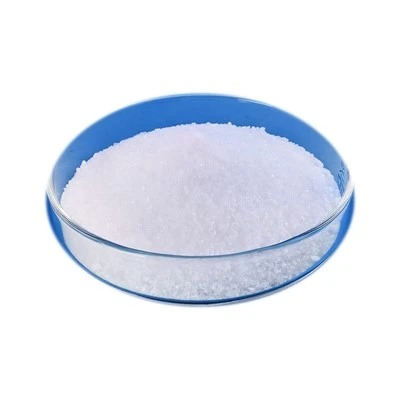
If you’re a grower who’s tired of stubby roots, transplant shock, drought stress, or root diseases, hit me up. I don’t do pushy sales stuff— I just want to help you figure out if our NWSF is right for your crop, how much to apply, and when to apply it. I’ve got testimonials from corn guys, tomato growers, potato farmers, greenhouse operators— you name it, I’ve worked with them. We can talk numbers, we can do side-by-side tests in your field, whatever works for you.
Nitrate Water-soluble Fertilizer Don’t get stuck using fertilizer that’s holding your roots (and your yields) back. Nitrate water-soluble fertilizer isn’t the next big trend—it’s been around for a while, but a lot of growers still don’t know how to use it properly. And as someone who’s seen the difference it makes, I’m here to help you get the most out of it for your farm.
References
- Crawford, N. M. (1995). Nitrate: Nutrient and signal for plant growth. The Plant Cell, 7(7), 859-868.
- Zhang, H., & Forde, B. G. (2000). Regulation of Arabidopsis root development by nitrate availability. Journal of Experimental Botany, 51(342), 51-59.
- Marschner, P. (2012). Marschner’s Mineral Nutrition of Higher Plants (3rd ed.). Academic Press.
- Gransee, A., & Führ, F. (2010). Nitrate in soils and plants: A review on distribution, functions, and role in plant nutrition. Journal of Plant Nutrition and Soil Science, 173(2), 188-205.
- Yamasaki, H., & Sakihama, Y. (2000). Nitrite reductase is a key enzyme in nitrate-dependent nitric oxide production in plants. Plant and Cell Physiology, 41(5), 531-537.
Yuncheng Tianhua Chemical Co., Ltd.
As one of the most professional nitrate water-soluble fertilizer manufacturers and suppliers in China, our products have good reputation in the market. Please rest assured to buy bulk nitrate water-soluble fertilizer in stock here and get quotation from our factory. For price consultation, contact us.
Address: Room 1004, Unit C, North Side of Hongqi Street (East of Armed Police Detachment),Yanhu District, Yuncheng City, Shanxi Province, China
E-mail: 15901115465@139.com
WebSite: https://www.ycthchemical.com/
