If you’ve ever worked in water treatment, food and beverage processing, or industrial chemical purification, chances are you’ve encountered nanofiltration (NF) membranes. As someone who’s spent the last decade engineering, manufacturing, and selling these membranes, I’ve seen first-hand how they’ve transformed industries—offering a sweet middle ground between the tight pores of reverse osmosis (RO) and the wider, faster pores of ultrafiltration (UF). NF membranes pull out small organic molecules, multivalent ions like calcium and magnesium, and even some heavy metals, all while letting monovalent ions (like sodium and chloride) pass through, cutting down on energy costs compared to RO. But for all their wins, NF membranes aren’t perfect. Over the years, I’ve talked to hundreds of plant operators, process engineers, and field technicians, and almost every one of them has run into a limitation that slowed their project down or raised their operational costs. Today, I want to pull back the curtain on those real, on-the-ground limitations—no industry jargon for the sake of buzzwords, just the honest challenges I’ve seen, and what we do as a supplier to help our customers navigate them. Nanofiltration Membrane

Let’s start with the biggest pain point most operators face right out the gate: chemical sensitivity, especially to oxidizing agents. I can’t tell you how many times a customer has called us, frustrated, because they accidentally dosed their feed water with too much chlorine during a pre-treatment step—only to find their NF membranes were toast within days. NF membranes, most of which are made from polyamide thin-film composite (TFC) material, are way less tolerant of oxidizers like chlorine than RO membranes. RO can handle up to 1,000 parts per million-hour (ppm·h) of chlorine exposure, but most standard NF membranes max out at 100–200 ppm·h. That means even a single spike of 10 ppm of chlorine for 20 hours is enough to eat away at the polyamide layer, making pores expand, rejection rates drop, and flux (the amount of water that passes through the membrane) become inconsistent. I once worked with a dairy plant in the Midwest that skipped a critical pre-treatment pH adjustment step and dosed their NF system with 15 ppm chlorine to kill biofilm. By the time they caught the mistake, 12 of their 36 membrane elements were rejecting 15% less lactose than they should, and they had to replace them 18 months early—costing them over $40,000. Now, we stock a line of chlorine-resistant NF membranes made with cross-linked polyamide that can handle up to 800 ppm·h of chlorine, but we always have to have the hard conversation with customers: pre-treatment isn’t optional for NF. You can’t just dump chlorine into feed water and call it a day—you need dechlorination steps, like sodium bisulfite, or you have to use those specialized membranes from the start. It’s a limitation that’s non-negotiable, but it’s one we’ve built solutions to address, so our customers don’t have to learn it the hard way.
Next up is fouling, and let’s be clear: fouling isn’t a unique problem to NF, but it hits NF membranes harder than almost any other membrane type. Why? A big part of it comes down to their pore size and charge. Most NF membranes are slightly negatively charged at neutral pH, which means they repel anions like nitrate and sulfate, but they also attract positively charged foulants—think calcium, magnesium, and multivalent metal ions, plus organic matter like humic acids and proteins. That’s called organic and colloidal fouling, and it builds up on the membrane surface over time, blocking pores and raising the pressure you need to push water through. I talked to a municipal water treatment operator last year whose NF system was supposed to run for 3 years between cleanings, but they were doing chemical cleanings every 6 months because their source water had high levels of humic acid from nearby farm runoff. The extra cleanings cost them $12,000 a year in chemicals and downtime, not to mention the extra energy for higher pressure. What makes NF’s fouling problem worse is that unlike UF, which has larger pores and a thicker, more porous surface that foulants can’t penetrate as easily, NF’s thin polyamide layer is smooth, but once foulants get past that thin top layer, they get stuck deep in the pores, making them way harder to remove during cleaning. We’ve tested modified NF membranes with a more hydrophilic surface to reduce charge attraction to foulants, but even then, if feed water pre-treatment isn’t up to par, fouling is almost inevitable. It’s not a flaw that can be fixed with a new membrane alone—it’s a process limitation that requires careful design and monitoring, which is why we work hand-in-hand with customers to map their feed water and suggest pre-treatment tweaks, like coagulation or ultrafiltration, before the NF step.
Another huge limitation is pH sensitivity. NF membranes operate best in a narrow pH range—usually 5 to 8 for standard polyamide types. If you go too low (below 4) or too high (above 10), the polyamide layer starts to degrade. At low pH, the membrane’s amine groups get protonated, which can alter the charge and shrink or expand pores, messing up rejection rates for both ions and organics. At high pH, the amide bonds in the polyamide layer hydrolyze, breaking down the membrane structure entirely. I once had a food and beverage customer processing fruit juice that accidentally ran their system at pH 3.5 because of a faulty pH sensor. Within 6 weeks, their membrane rejection for citric acid dropped by 20%, and they had to replace elements 6 months ahead of schedule. Even beyond degradation, pH affects NF’s main purpose: ion rejection. Since NF’s whole thing is separating monovalent from divalent ions, if pH shifts, that charge balance changes, and rejection rates for salts go out the window. Some specialized NF membranes can operate in a slightly wider range—we have a line that works from pH 3 to 10, but even those have their limits. That means for any customer working with feed water that’s naturally acidic or basic, or processing products that require extreme pH, NF might not be the first pick unless you have robust pH monitoring and correction systems built in. It’s not a showstopper, but it’s a limitation that requires upfront planning, not after-the-fact fixes.
Then there’s the issue of scalability and performance trade-offs. Every NF membrane has a balance between flux (how much water it produces) and rejection (how well it pulls out the contaminants you want). If you want a membrane that rejects 95% of divalent ions, you might have to accept a lower flux—meaning you need more membrane area to meet your production goals, which raises capital costs upfront. If you prioritize high flux, you might have to accept lower rejection rates, which could mean you’re not getting the purification you need for your application. This trade-off gets even trickier when you’re scaling up from a pilot system to full production. A lot of customers run a small pilot, see great flux and rejection, then scale up only to find that the larger system has uneven flow distribution across the membrane elements. Some elements get too much water, leading to higher fouling, while others get too little, leading to low flux. We’ve had that exact problem with a pharmaceutical customer that wanted to scale a small pilot for purifying raw material. Their pilot had a 92% rejection rate and 15 L/m²·h flux, but when they built a full 10-element array, the average rejection dropped to 84% because of flow maldistribution. We had to redesign their array with better feed spacers and flow channels to fix it, but that’s a limitation that comes with moving from lab to full-scale—one that requires detailed hydraulic modeling and testing, not just a copy-paste of small-scale results.
Also, let’s not forget about the variability in feed water composition. NF membranes are designed for specific water chemistries, and if your feed water changes seasonally—think agricultural runoff increasing organic matter in the spring, or industrial discharge shifting ion levels in the summer—your membrane performance will shift right along with it. A municipal customer in the Pacific Northwest told us their NF system’s sulfate rejection jumped from 85% in the dry summer months to 70% in the wet winter, when rainwater leached more organic matter and calcium into their source water. The extra organic fouling in the winter clogged pores, changing the membrane’s charge and rejection. That means operators have to constantly monitor performance, adjust cleaning schedules, and sometimes even adjust operating parameters like pressure or crossflow velocity to keep things on track. It’s not a failure of the membrane—it’s a real-world limitation of working with variable feed streams—but it adds an extra layer of operational work that customers have to plan for.
Now, I don’t want to leave you thinking NF membranes are useless. For all these limitations, they’re still one of the most cost-effective options for softening water, removing nitrates, purifying food products, and treating industrial wastewater. But as a supplier, my job isn’t to sell you a membrane and walk away—it’s to be honest about what they can’t do, and work with you to mitigate those limitations. If you’re dealing with high chlorine levels, we can point you to our specialized chlorine-resistant NF lines and help you design pre-treatment systems that protect them. If you’re struggling with organic fouling, we can recommend membrane configurations with modified surfaces that repel foulants, and help you set up a regular cleaning and monitoring schedule. If you’re scaling a system, we do small-scale piloting and hydraulic modeling to avoid that flow distribution problem before you invest in full equipment.
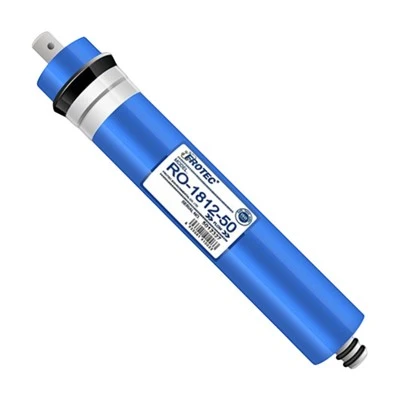
At the end of the day, every membrane technology has its trade-offs. RO is super tight but uses way more energy, UF handles fouling well but can’t remove small ions. NF is powerful, but it’s not foolproof. The key is going into a project with your eyes open, knowing the limitations, and partnering with a supplier who doesn’t just push a product but understands your specific application and challenges. If you’re working on a project where NF is on the table, or you’ve already run into one of these limitations that’s holding you back, we’re here to walk through your needs, test different solutions, and help you get the performance you’re after. If you’d like to learn more and talk through your process, feel free to reach out to connect for a procurement discussion.
Large Capacity EDI Module References
Madaeni, S. S., & Ahmadi, T. (2009). Chemical stability of polyamide thin film composite reverse osmosis and nanofiltration membranes. Desalination, 249(3), 1046-1052.
Ng, H. Y., & Tan, C. P. (2015). Organic fouling of nanofiltration membranes: A review of mechanisms, factors, and mitigation strategies. Journal of Membrane Science, 479, 138-158.
Van der Bruggen, B., & Vandecasteele, C. (2003). Limitations of nanofiltration for water treatment: A review. Water Research, 37(17), 4015-4027.
Wei, X., et al. (2020). pH-dependent performance of nanofiltration membranes: A review. Separation and Purification Technology, 238, 116467.
Fujian Huamo Technology Co., Ltd.
Fujian Huamo Technology Co., Ltd. is one of the most professional nanofiltration membrane manufacturers and suppliers in China, featured by quality products and good service. Please rest assured to wholesale the best nanofiltration membrane made in China here and get price list from our factory. Contact us for custom service and OEM service.
Address: No.6 Hengtong Rd, Shanmei Village, Xiamei Town, Nanan City, Fujian Province, China
E-mail: info@huaromembrane.com
WebSite: https://www.hmromembrane.com/
