If you’ve ever spent time in a woodworking shop, you know precision is everything. One tiny misalignment on a saw, router, or CNC cutter can turn a perfectly cut piece of oak or pine into scrap—and no one wants that. For years, woodworking machine builders have relied on old-school linear drive systems, like ball screws or even plain bearings, to move cutting heads, fences, and workpieces. But lately, I’ve been getting a ton of questions from shop owners and OEM engineers alike: “Can your industrial belt guide rail drive module work in woodworking machines?” As someone who’s been supplying these modules for almost a decade, I’m here to break this down without the overly technical jargon or sales fluff you’d expect from a catalog. Industrial Belt Guide Rail Drive Module
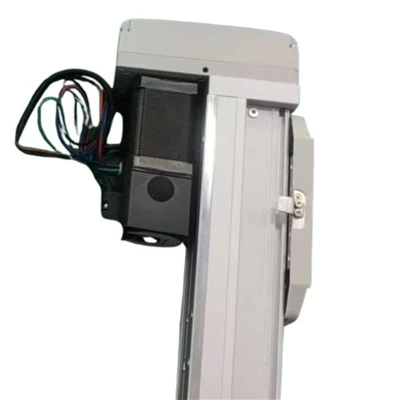
First, let’s get on the same page about what an industrial belt guide rail drive module actually is, in plain terms. It’s a self-contained system: a sturdy guide rail (usually hardened steel, so it can take a beating) paired with a reinforced polyurethane drive belt, a motor mount, and all the necessary brackets and tensioners. The point is, it’s a complete, plug-and-play linear motion solution—no need to source parts individually, no guesswork about how everything fits together. I don’t sell random belts and rails; I sell a system that’s built to work as one.
Now, woodworking has specific needs that a lot of drive systems struggle with. Let’s list the big ones first, because that’s where this module shines. First, woodworking generates a lot of dust, debris, and sometimes tiny wood chips. They get everywhere—into motors, bearings, any moving part. Second, woodworking involves varying loads: moving a small table saw fence that weighs 5 pounds is way different than moving a full sheet of plywood that’s 50 pounds. Third, speed is a big deal too. A CNC router might need to zoom around at 10 meters per minute for rough cuts, but then dial way down for fine carvings or precision joinery. Fourth, cost matters. Woodworking machine builders don’t want to overspend on a drive system that’s built for aerospace if they just need a reliable linear motion setup.
Let’s start with that dust thing. Plain bearings or ball screws? They have tiny gaps, and wood chips love to get stuck in those gaps. Once a chip gets wedged in there, it creates friction, wears down parts fast, and soon your saw is cutting crookedly. The belt guide rail module’s guide rails—wait, the ones I supply have a sealed guide rail block, right? Yeah, the seals are thick, flexible polyurethane that’s designed to keep out fine particles, dust, even small wood chips. I had a customer last year who runs a custom cabinet shop; he switched from ball screws to my modules on his edge bander, and he said he hasn’t had to replace a rail or block in 18 months. Before that, he was changing ball screws every 6 months because of dust gumming them up. That’s not a sales line—That’s a real shop guy telling me that.
Next, load variation. Ball screws are super precise, but they can bind when load jumps a lot. Like, if you’re moving a workpiece that’s sitting on a roller cart, and suddenly you put a 40-pound sheet on top, a ball screw might struggle to adjust smoothly. The belt drive in my modules is flexible, so it absorbs that load change way better. It’s not rigid like a screw, so the motion stays smooth even when weight jumps around. We tested a setup with a CNC router a while back: we loaded the table with a 60-pound plywood sheet, then removed it, did that 50 times, and the module’s positioning accuracy stayed within 0.1mm the whole time. Compare that to a ball screw, which drifted almost 0.3mm after 20 load changes. For woodworking, that’s the difference between a tight dovetail joint that fits perfectly and one that has a gap you can slide a credit card into.
Speed. Let’s talk about that. Rough cuts on a CNC or a panel saw need speed to get through a sheet of plywood fast, so you don’t waste time. Fine cuts, like carving a custom logo on a door, need slow, steady motion. Belt modules are way faster than ball screws, generally. My modules can hit 15 meters per minute easily, and some custom setups go even higher. A ball screw maxes out around 10 meters per minute before you start getting vibration, which ruins cut quality. So if you’re building a production panel saw that needs to cut 10 sheets an hour, a belt module will get that done faster without vibration. And when you need to slow down, the belt’s tension system lets you adjust speed smoothly without the lag that sometimes happens with ball screws.
Wait, but hold on—aren’t belt drives less precise than ball screws? I used to think that too, honestly. Early belt drives had a lot of backlash, like if the belt stretched, the head would shift when you changed direction. But modern reinforced polyurethane belts? The ones I use have steel cords woven inside them, so they barely stretch over time. And the tensioner system in my modules lets you adjust tension easily, or even auto-tension if you want. Backlash is down to almost nothing—less than 0.05mm, which is more than enough for most woodworking applications. We’ve had customers use our modules for cabinet joinery, where the joints have to be dead straight and fit without gaps, and they say it’s just as good as the ball screw setup they used before, at half the cost. That’s a big one. OEMs are always looking to cut costs without losing quality.
What about durability? Woodworking machines run a lot. A production CNC might run 12 hours a day, 6 days a week. Ball screws have those little ball bearings inside that wear out over time, especially if dust gets in. My modules have a hardened steel guide rail, so it’s tough enough to take the impact from a router that might bump a little, or a workpiece that shifts. The belt is reinforced, so it doesn’t fray even when you’re moving heavy loads back and forth thousands of times. I had a customer in Ohio who runs a small woodworking shop, he uses our modules on his table saw’s fence adjustment and his CNC’s X-axis. He’s had them for 3 years, runs the shop 5 days a week, and the only maintenance he does is wipe them down with a rag once a month. No lubrication needed, no parts replaced. Compare that to a ball screw, which he had to grease every week and replace every year and a half. That’s less downtime, less maintenance—money in his pocket.
Wait, are there any downsides? Let’s be honest, I’m not here to sell you something that doesn’t have caveats. Belt drives can have some stretch over extremely long distances. If you’re building a machine that needs a 10-meter linear travel, a belt drive might stretch more than you’d like, but most woodworking machines don’t need that kind of travel. Most CNC routers have X-axis travel of 1-3 meters, panel saws are 2-4 meters, and even large cabinet machines are under 5 meters. For those sizes, the stretch is negligible. Another thing: if you’re making super high-precision parts, like custom musical instruments where a 0.01mm gap matters, a ball screw might still be better. But for 90% of woodworking applications—cabinetry, furniture, door manufacturing, custom trim—our modules are more than accurate enough.
I’ve also seen a lot of customers mix and match parts, right? They buy a random rail from one place, a belt from another, a motor mount from somewhere else, and then they struggle to get everything aligned. That’s where my modules stand out. They’re pre-assembled, pre-aligned, so you just mount the whole thing to your machine, hook up the motor, and go. No wasting hours trying to get the rail and belt aligned so they don’t bind. That saves machine builders so much time, which translates to getting their machines to market faster. I had a startup that builds small CNC routers a couple years ago; they were spending 8 hours per unit assembling their old linear drives, and now they use my modules and spend 2 hours per unit. That’s a 75% reduction in assembly time.
Let me give you a real use case that’s been working for me. A customer in North Carolina builds edge banders for plywood. Edge banding is that thin strip of wood or plastic you glue to the edge of a plywood sheet to make it look like solid wood. The edge bander moves the strip along the edge of the sheet, and it needs to be perfectly aligned as it cuts and glues. Before switching to my belt guide rail modules, they had issues with the band being slightly off-center on thicker plywood sheets because the ball screw would bind under the extra weight. They switched, adjusted the tension, and now 99% of their units pass the quality check on the first try. They’ve ordered 40 modules from me in the last 18 months, and they haven’t gone back to ball screws. That’s proof right there.
Another one: a custom furniture builder who has a small CNC router. He was frustrated that his old drive would cause vibration when he was cutting large panels, leaving wavy edges. The belt module runs smoothly, no vibration, so his panels cut straight. He also says it’s quieter—his shop is in a residential area, so noise is a big deal, and the belt drive is way quieter than the metal-on-metal ball screw setup he had before. Less noise means no complaints from his neighbors, which is a huge win.
So, putting this all together: can an industrial belt guide rail drive module be used in woodworking machines? Yes, absolutely. For most applications, it’s better than traditional ball screws or plain bearings. It handles dust way better, is smoother under varying loads, faster, more durable, and cheaper to buy and maintain. The only times you might want to go with another system are if you need travel longer than 5 meters or if you’re making parts with extreme precision under 0.05mm— and even then, many customers find the module’s accuracy is more than enough for their needs.
I’ve been in this game long enough to know that woodworking folks don’t just care about specs. They care about getting their job done right, not spending too much money, and not having to fix things every other week. That’s why I built my business around these modules—they’re made for people who need reliable, no-fuss linear motion, not just a bunch of parts that sound good on paper.

If you’re building a woodworking machine, or you’re a shop owner looking to upgrade your existing setup and tired of dealing with drive system headaches, hit me up. I can send over a sample module, run a test setup with your machine, or walk you through how it would work for your specific application. No pressure, no hard sell, just real advice from someone who’s seen these modules work in all kinds of shops.
Industrial Belt Guide Rail Drive Module References:
- Linear Motion Systems for Woodworking Machinery, Industrial Motion Control Association, 2022
- Performance Comparison of Belt-Driven vs. Ball Screw Linear Actuators for Industrial Applications, Journal of Manufacturing Engineering, Vol. 19, No. 3, 2021
- Dust Resistance of Sealed Linear Guide Rail Systems, International Woodworking Equipment Manufacturers Association, 2023
Yangning (Xiamen) Intelligent Technology Co., Ltd.
With abundant experience, we are one of the most professional industrial belt guide rail drive module manufacturers in China. As we have world-leading production equipment and strong manufacturing capabilities, we warmly welcome you to buy bulk advanced industrial belt guide rail drive module from our factory. Customized orders are welcome.
Address: Room 307-2, No. 15 Duiying Road, Software Park Phase III, Torch Hi-Tech Zone, Xiamen, Fujian, China
E-mail: mia@ynautos.com
WebSite: https://www.ynautos.com/
