Hey there! I’m a supplier of Host Cell Residual Protein (HCP) Detection Kits. You know, when it comes to these kits, one question that often comes up is whether they’re available in different detection formats. Well, let me tell you, the answer is a big yes! Host Cell Residual Protein Detection Kits

Different Detection Formats of HCP Detection Kits
First off, let’s talk about ELISA (Enzyme – Linked Immunosorbent Assay) kits. These are like the old – school champs in the HCP detection game. ELISA kits work based on the principle of antigen – antibody interactions. You’ve got a plate with antibodies coated on it. When your sample with HCPs is added, the HCPs bind to these antibodies. Then, you add a secondary antibody linked to an enzyme. When you add a substrate, the enzyme reacts with it, and you get a color change. The intensity of the color is proportional to the amount of HCPs in your sample.
One great thing about ELISA kits is their sensitivity. They can detect really low levels of HCPs, which is super important, especially in biopharmaceutical production. For example, if you’re making a therapeutic protein, even a tiny amount of HCP contamination can cause immune reactions in patients. So, being able to detect those low – level HCPs is crucial. Also, ELISA kits are relatively easy to use. You don’t need a whole bunch of fancy equipment to run them. Just a basic plate reader to measure the color change, and you’re good to go.
But ELISA kits also have some drawbacks. They can be time – consuming. A typical ELISA assay can take several hours, which might be a bit of a pain if you’re in a hurry to get results. And they require a fair amount of sample volume. If you’re working with a limited amount of your precious sample, that could be an issue.
Next up, we’ve got the Western blot format. This one’s a bit more complex but also very powerful. In Western blotting, you first separate the proteins in your sample using gel electrophoresis. This spreads the proteins out based on their size. Then, you transfer these separated proteins onto a membrane. After that, you use antibodies to detect the HCPs on the membrane. The antibodies bind to the HCPs, and you can visualize them using a detection system, like a chemiluminescent or fluorescent one.
The advantage of Western blotting is that it gives you additional information about the size of the HCPs. You can see if there are different sized HCPs present in your sample, which can be useful for figuring out where the contamination might be coming from. For example, if you see a specific sized HCP that’s always showing up, it could be related to a particular step in your production process.
However, Western blotting is also more labor – intensive. It requires more hands – on work and a bit more expertise to do it correctly. And like ELISA, it also takes a while. You need to run the gel, transfer the proteins, and then go through the whole antibody – binding process, which can easily take a full day or more.
Another detection format is the multiplex detection system. These are really cool. Instead of just detecting one or a few HCPs at a time, multiplex systems can detect multiple HCPs simultaneously. They use technologies like bead – based assays or microarray – based assays. In a bead – based multiplex assay, for example, different beads are coated with different antibodies specific to different HCPs. When your sample is added, the HCPs bind to the corresponding beads. Then, you can use a flow cytometer or a similar instrument to detect the beads and the bound HCPs.
Multiplex detection systems are great because they save time and sample. You can get a lot of information from just one small sample. And they can give you a more comprehensive view of the HCP profile in your sample. But they can be a bit pricey, and you need to have the right equipment to run them.
Choosing the Right Detection Format
As a supplier, I often get asked how to choose the right detection format for a particular situation. Well, it depends on a few factors.
If you’re just doing some routine quality control and you’ve got plenty of sample and time, an ELISA kit might be a good choice. It’s reliable and cost – effective. On the other hand, if you need to know more about the size of the HCPs or if you suspect a complex contamination situation, Western blotting could be better.
If you’re in a hurry and want to get a lot of information from a small sample, a multiplex detection system is probably the way to go. But you need to consider your budget and whether you have the necessary equipment and expertise to use it.
Why Our HCP Detection Kits Rock
Now, I know what you’re thinking. "There are so many HCP detection kits out there. Why should I choose yours?" Well, let me tell you a few reasons.
First of all, our kits are high – quality. We’ve put a lot of time and effort into making sure that they’re accurate and reliable. Whether it’s an ELISA kit, a Western blot kit, or a multiplex system, you can count on getting consistent results.
Secondly, we offer great customer support. If you have any questions about how to use the kits, or if you run into any problems during the assay, our team is here to help. We’ve got experts who can walk you through the process and give you advice on any issues you might encounter.
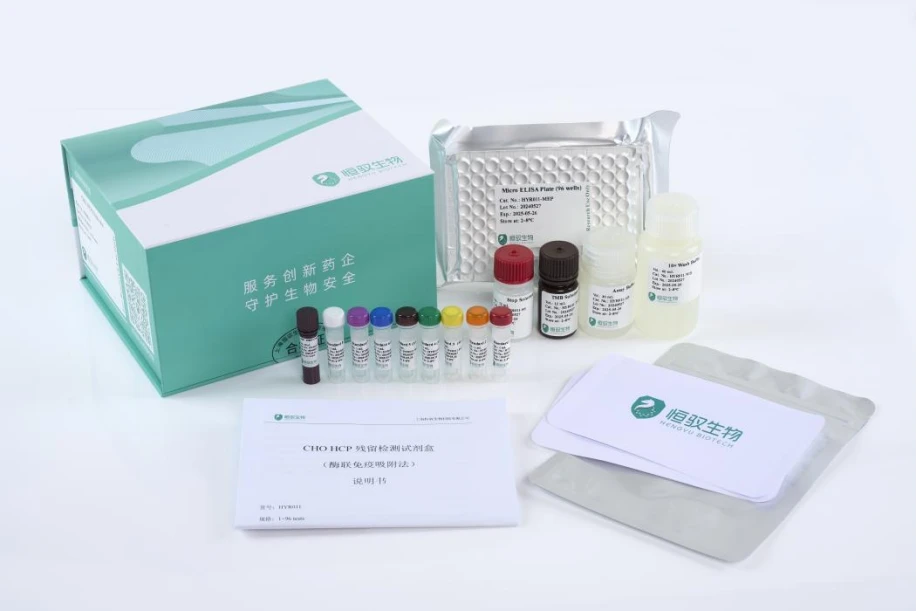
We also keep our prices competitive. We know that cost is a big factor for many of our customers, especially in the biopharmaceutical industry where there are a lot of expenses. So, we try to offer the best value for your money.
Let’s Chat
Host Cell Residual Protein Detection Kits If you’re in the market for HCP Detection Kits and want to learn more about our different detection formats, we’d love to hear from you. Whether you’re a researcher in a small lab or a big biopharmaceutical company, we’ve got the right solution for you. Contact us to discuss your specific needs, and let’s start a conversation about how we can help you with your HCP detection requirements.
References
- Harlow, E., & Lane, D. (1988). Antibodies: A Laboratory Manual. Cold Spring Harbor Laboratory.
- Lottspeich, F., & Zorbas, H. (1998). Bioinformatics: A Practical Guide to the Analysis of Genes and Proteins. Wiley – VCH.
- Zhou, Q., Crockett, M., & Shukla, A. A. (2017). Host – cell proteins in bioprocessing of recombinant therapeutic proteins – challenges and solutions. Biotechnology Journal, 12(6), 1600587.
HyQure Biotech Co., Ltd.
As a professional host cell residual protein detection kits enterprise in China and Switzerland, we rely on international compliance standards, leverages excellent quality and technical strength. If you have any enquiry about cooperation, please feel free to email us.
Address: Building 18, Lane 2777 East Jinxiu Road, Pudong New Area, Shanghai 2.Stücki Park Hochbergerstr. 60 I, 4057 Basel Switzerland
E-mail: service@hyqure.com
WebSite: https://www.hyqure.com/
