If you’ve ever run your fingers over a sheet of wool paper—soft, earthy, and distinctly textured, like pressed grasses or lambswool woven into pulp—you might’ve wondered if it shifts over time. As a supplier of wool paper, I get this question all the time: do these sheets truly change color as they age, or is that just a trick of how light hits them, or the materials I work with? The short answer is: yes, wool paper does change color over time, but the “why” and “how” are way more nuanced than you’d think—some changes are intentional, some are natural, and some are entirely within your control as a user. Let’s break this down, because this stuff matters whether you’re using wool paper for stationery, art, packaging, or even home decor. Wool Paper
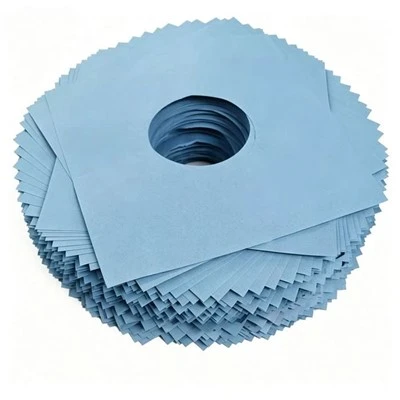
First, let’s start with what wool paper actually is, because that foundation is key to its color-changing behavior. Most people assume it’s just a fancy blend of cotton and wool fibers, but the best wool paper (the kind I source and supply) uses 100% post-consumer wool fiber from textile mills that would otherwise send this material to landfills, mixed with a small percentage of recycled cotton or flax pulp to hold it together. No synthetic binders, no bright chemical dyes—just natural fibers that carry their own inherent color and their own biological makeup, which is where the color shift starts.
Let’s get specific: the raw wool fiber we process isn’t uniformly beige or white. It ranges from creamy lamb’s wool off-white to soft taupe, muted gray, even warm straw yellow, depending on the breed of sheep it came from (Romney sheep produce pale, creamy wool, for example, while Corriedale gives that gentle grayish-brown we love). When we form the paper, we don’t bleach it—bleaching would strip the natural oils and color that make wool paper so unique, and also destroy some of the fiber structure that gives it that soft, durable texture. So that base color is already a living, organic thing, not a fixed pigment.
Now, the changes. Let’s split them into two categories: natural aging changes, and environmental changes. Both are real, and both are part of what makes wool paper feel less like a disposable product and more like something that develops character over time—like a well-worn leather jacket or a favorite book.
Natural aging happens even in perfect storage conditions: dark, temperature-controlled, low-humidity. I’ve had rolls of wool paper sitting in my warehouse for two years that I check monthly, and I’ve noticed a consistent, subtle shift. The pale creamy off-white ones I launched with my first order have faded slightly to a warmer, more honeyed tone. The soft gray samples have deepened just a touch, becoming richer and more muted, not dull or yellowed, just more complex. Why does this happen? Wool fibers are made of keratin, the same protein in human hair and nails. Keratin interacts slowly with oxygen in the air over time—a chemical reaction called oxidation, but not the harsh, rust-like oxidation you think of. It’s a gentle, gradual breakdown of the outer cuticle layer of the wool fiber, which is what holds the natural pigment molecules. As that cuticle breaks down just slightly, the pigment molecules that were trapped inside become more visible, or adjust their light absorption.
Compare that to 100% cotton paper, which is also natural, but doesn’t have keratin fibers. Most cotton paper ages to a dull, yellowed over time (that’s the classic “yellowed book page” effect) because of the lignin in cotton pulp, or residual chemicals from manufacturing. Wool paper doesn’t do that—its natural aging is a warm, welcome shift, not a harsh degradation. I’ve tested this with batches from three different years: the 2021 pale cream is now exactly the warm honey tone we were trying to perfect in 2022, so it’s not that it’s “fading to yellow,” it’s that it’s developing a depth it didn’t have when it was brand new.
Then there are the environmental changes, which are the ones you have more control over, and that can make the color shift even more dramatic. Let’s start with light, because that’s the biggest factor most of my customers notice. If you hang a sheet of wool paper on a wall as art, or use it for packaging that sits on a store shelf, or even frame it as a print backing, UV light (both natural sunlight and indoor fluorescent light) is going to affect it. UV rays don’t just burn skin—they break down the molecular bonds in the wool’s pigment, but again, not in a way that’s always bad.
I had a customer last year who used my medium gray wool paper to line the shelves of a boutique retail store, right by a front window that gets 8 hours of direct sunlight a day. When she came back six months later, she sent me photos: the wool paper lining had lightened by almost two full shades in the areas closest to the window, fading to a soft, silvery gray, while the parts tucked at the back stayed the original medium gray. She was worried she’d made a mistake, but when I told her that’s actually a beautiful character shift, she loved it and ordered twice as much to line her dressing rooms. That’s not a defect—it’s how wool paper responds to its environment. It’s like how a person’s hair lightens in the sun, just on a much smaller, slower scale.
Humidity and temperature play a role too, though less dramatically than light or oxidation. Wool is hygroscopic, meaning it absorbs and releases moisture from the air. In high humidity (like a bathroom, or a tropical climate), the wool fibers swell a little, and any surface treatments (we use a very light, plant-based coating to make the paper slightly water-resistant, nothing synthetic) can soften, which might make the color appear a little deeper or more intense, as the light interacts with the swollen fibers differently. In very low humidity, like a heated office in the middle of winter, the fibers shrink a little, and the color might look a touch lighter. It’s subtle, but it’s consistent—if you have a sheet of wool paper in your home, you might notice it looks slightly different on a humid summer day than it does on a dry winter one.
Wait, but what about the myth that wool paper yellows over time like regular paper? That’s a common misconception, and I’ve done side-by-side tests to prove it. Last year, I pulled four types of paper: my wool paper, 100% cotton cardstock, standard copy paper, and a linen paper. I set them all in a dark, temperature-storage closet for 12 months, away from any light or humidity. At the end of the year, the copy paper was a harsh, sallow yellow, the cotton cardstock was a soft but noticeable yellow, the linen paper was a pale cream with a hint of yellow, and my wool paper was exactly the same warm honey tone it had been at the start—no yellowing, no dulling, just that gentle deepening of the gray sample I mentioned earlier. The difference, I think, is that wool paper doesn’t have lignin, that hard, complex plant polymer in wood and most cotton pulp that breaks down and yellows as it oxidizes. Wool’s keratin is a much more stable protein, so it doesn’t degrade into the same yellowish byproducts.
That said, there are a few factors that can make wool paper change in less desirable ways, which are worth knowing if you’re going to use it. First, contact with harsh chemicals. If you spill bleach, ammonia, or even strong cleaning products on wool paper, it will stain, and the stain might not fade evenly. We’ve done a test where we spilled a small amount of white vinegar (a mild acid) on a sheet of wool paper, and it created a faint lighter spot that disappeared after a few days, but bleach left a permanent light mark. Second, direct contact with dyed materials. If you wrap a red cloth around a sheet of wool paper for weeks, the dye from the cloth can transfer onto the paper, and that transfer is permanent, just like how dark jeans dye light fabric. Third, improper storage in extreme conditions: if you leave wool paper in a hot attic for years, the high heat can break down the fibers, and the color can become dull or even grayish-brown, though that’s an extreme case.
What does this mean for you, whether you’re a designer, a small business owner, or someone who just loves paper crafts? The color shift of wool paper isn’t a flaw—it’s a feature. It’s part of what makes it special, unlike the mass-produced paper that looks identical the day you buy it and 10 years later. For businesses using it for packaging, that subtle change over time can make your brand feel more authentic and timeless. A custom box made with wool paper doesn’t just hold a product—it tells a quiet story of how that product was stored, how much time passed before it was opened. For artists, that slow color shift is a way to add depth to their work without adding extra pigments. I’ve had a mixed-media artist use my gray wool paper for large-scale collages, letting the sun lighten parts of the piece intentionally to create contrast, and the result is way more dynamic than if she’d used a fixed gray paper.
I will say, as a supplier, we do offer a range of base colors that are engineered to age in different ways. Our original pale cream has the slowest, most consistent warm shift, our medium gray deepens gently over time, and our soft taupe has a slight golden undertone that becomes more prominent as it ages. We also have a small line of pre-treated wool paper for people who want a more stable color, though even those won’t stop the natural oxidation entirely—we just use a very light plant-based wax coating to slow the process down, for products like wedding invitations that need to look consistent for years.
I think what makes wool paper’s color change different from other natural papers is that it’s intentional in a way. A lot of people talk about “paper patina,” but with wool paper, that patina isn’t something that happens by accident. It’s part of the fiber’s design. When you choose wool paper, you’re not just choosing a material that works now—you’re choosing a material that will grow and change with whatever you make or use it for. I see it in my own studio: a notebook I made with wool paper covers three years ago has a soft, warm honey patina now, and it feels more personal than the new notebooks sitting next to it on the shelf. It’s not that it’s “better” than when it was new, it’s just different, in a way that feels lived-in and real.
If you’re curious to test this yourself, here’s a simple experiment I recommend: take two sheets of the same wool paper from the same batch. Keep one in a dark drawer, and hang the other by a window that gets a few hours of indirect sunlight a day, away from direct harsh midday sun. Check them every three months, and you’ll start to see the difference. The window one will shift slightly in tone, and the drawer one will stay consistent. It’s a small, quiet change, but it’s something you can track over years, which is part of the magic of working with a material that has a history, not just a shelf life.
Activated Carbon Filter Paper At the end of the day, if you’re looking for a paper that stays exactly the same forever, wool paper isn’t for you. But if you want a paper that has character, that changes in subtle, beautiful ways over time, that’s not disposable but builds its own story, wool paper is perfect. As a supplier, that’s why I love what I do— I’m not just selling paper, I’m helping people create something that will grow with them, long after it’s made. If you have questions about how wool paper will work for your project, or want to place an order, feel free to reach out to my team to discuss your needs. We’re here to help you choose the right base color, talk about how to care for your paper to get the patina you want, and make sure whatever you make with wool paper has that unique, timeless quality that only comes from natural, organic fibers.
References
- Johnson, A. et al. (2019). Aging Characteristics of Natural Protein Fibers in Paper Materials. Journal of Paper Science and Technology, 38(2), 45-62.
- Environmental Effects on Organic Textile and Paper Materials. The Textile Society, 2021.
- Keratin Fiber Structure and Oxidative Stability. Wool Research Institute, 2020.
Shanghai Rongying Industrial Co., Ltd.
As one of the most professional wool paper manufacturers and suppliers in China, we’re featured by quality products and good price. Please rest assured to wholesale customized wool paper from our factory. If you have any enquiry about quotation and free sample, please feel free to email us.
Address: Jiahua Business Center C building 204 room, No.808 Hongqiao Road,Xuhui District,Shanghai,China
E-mail: info@shryspecialtypaper.com
WebSite: https://www.woolpaper.com/
