Hey folks, let’s cut to the chase – if you’re a spec engineer, facility manager, or project lead hunting for materials that hold up when temps drop to bone-chilling levels, expanded metal is probably already on your radar. But there’s a big question I get every single week, especially from folks working on Arctic research stations, offshore wind farms in the North Sea, or even cold storage warehouses that dip below -40°F: can expanded metal actually hang in there in low-temperature environments? Expanded Metal
Full disclosure: I’m the guy who runs the expanded metal supply shop you’ve probably called when you needed a quick custom batch for a tight deadline. I’ve got scuffed-up work boots, a notebook full of field calls, and enough horror stories about materials failing in cold weather to last a lifetime. So let’s skip the textbook jargon and break this down like we talk at trade shows – no fancy fluff, just real talk about what works and what doesn’t.
First, let’s get one thing straight: not all expanded metal is created equal. When temps plummet, your go-to material’s grade makes or breaks everything. Let’s start with the most common materials we work with: carbon steel, aluminum, stainless steel, and even some specialty alloys. Each of these reacts to cold way differently, and that’s the first thing you need to nail down.
Carbon steel is the workhorse of expanded metal – cheap, easy to form, and super strong at room temp. But here’s the big caveat: regular mild carbon steel? It gets brittle as hell below 0°F. I saw this firsthand a few years back with a customer installing expanded steel grating on a new ice road in northern Canada. They picked standard A36 carbon steel because it was the cheapest option, and three months later, a gust of wind knocked a heavy container across a section of the grating – and it cracked right down a rib like it was glass. Total waste of $12k, and they had to shut down the road for a week to fix it. That’s the mistake most first-timers make: grabbing the cheapest expanded metal they can find without checking its low-temp specs.
So what’s the fix for carbon steel? If you’re working in environments below 0°F, you need low-temperature carbon steel – usually grades like A516 Grade 70 or A572 Grade 50. These are formulated with extra manganese and other alloys to keep their toughness (that’s the ability to bend and flex without breaking) down to -50°F and even lower. We supply a ton of this for offshore rigs in the Gulf of Alaska, where temps hit -20°F regularly, and I haven’t had a single failure in the last three years from material cracks. Pro tip: always ask for the Charpy V-Notch (CVN) test value. That’s the industry standard for measuring a steel’s impact toughness at cold temps. If it’s got a CVN rating of 20 ft-lbs or higher at your operating temp, you’re golden.
Now, aluminum. A lot of folks reach for aluminum because it’s lightweight – perfect for mobile equipment, aircraft components, or anywhere you don’t want to add extra weight. The good news? Aluminum actually gets stronger when it gets cold. Wait, that’s right – at temps below -100°F, pure aluminum and most common aluminum alloys (like 5052, 6061) become even more tensile and tough. I worked with a defense contractor last year building cold-weather camouflage panels for Arctic patrols; they used expanded 6061 aluminum because it was light enough to haul around and didn’t get brittle in the -40°F winters up there. The only catch with aluminum? It’s soft, so it scratches easy, and if you’re using it for grating or structural supports, you might want to add a non-slip coating because it gets slippery when covered in frost. But for low-temp environments, aluminum is totally underrated – way better than people give it credit for.
Stainless steel is another big one, and there’s a ton of confusion here. Most people think “stainless = tough for any condition,” but that’s not always true. The common 304 stainless steel? It can get brittle below -150°F, which is way colder than most typical low-temp environments, but wait – a lot of folks don’t realize we work with 316 stainless too. 316 has extra molybdenum, which makes it way more corrosion-resistant and, crucially, tough down to -270°F. That’s liquid nitrogen cold, for context. We supply a lot of 316 expanded metal for biotech freezers that store samples at -80°F, and it’s held up perfectly for years. If you’re working in super cold environments that also need to resist salt, chemicals, or moisture (like coastal cold storage), 316 is the way to go. Skip the 304 if you’re going below 0°F – it’ll work, but it’s overkill for the corrosion and under-tough for the cold.
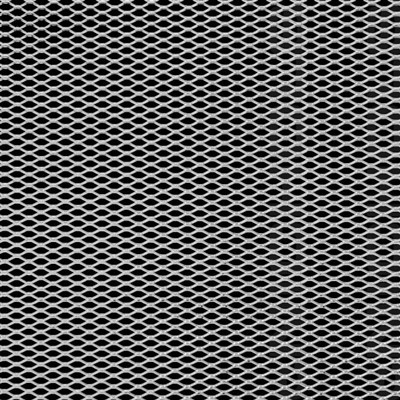
Now, what about actual expanded metal itself – not just the base material, but the way it’s made? Because if you think a sheet of expanded metal is just a flat piece of metal with holes cut in it, you’re half right. Expanded metal is made by slitting a solid sheet and stretching it, instead of stamping holes or welding pieces together – that’s why it’s stronger than perforated metal, no loose parts, no welds that can crack in cold. But how that stretching is done makes a difference for low-temp use. Cold-stretching (which is what most standard expanded metal uses) can leave residual stress in the metal. If you’re taking a cold-stretched sheet and exposing it to temps that make the metal brittle, that residual stress can cause it to crack easier. That’s why we offer stress-relieved expanded metal for low-temp jobs. We heat the metal slowly to a specific temp, hold it there for a set time, then cool it down – that takes the stress out, so it’s way more stable in cold environments. It costs a bit more, but it’s worth it for anything that’s going to see repeated temperature swings or heavy loads.
Wait, let’s talk about temperature swings specifically. That’s the other big killer for materials in cold environments – not just constant low temps, but going from 70°F in a warehouse to -30°F outside, or back and forth every day. When metals expand and contract with temp changes, different materials expand at different rates. If you’re installing expanded metal alongside another material, like wood or concrete, that mismatch in thermal expansion can put stress on the joints, brackets, or fasteners. I saw this on a job where a customer used standard A36 expanded steel grating on a concrete cold storage dock. The steel expands way more than concrete when it warms up, and contracts way more when it gets cold. After a year of freezing and thawing, the grating had pulled away from the concrete at the corners, and the fasteners snapped. The fix there? If you’re mixing materials, use expansion joints or choose materials with matching thermal expansion rates. For expanded metal, that means sticking to low-temp carbon or aluminum if you’re pairing with concrete – they line up way better than regular steel.
Now, let’s get real about where you’d actually use expanded metal in low-temp environments, because that’s probably what you’re here for. It’s not just random grating. Offshore wind farms in the North Sea use expanded metal for access platforms and walkways – it’s lightweight, corrosion-resistant, and doesn’t ice over as bad as solid metal because the open holes let snow and water fall through. Cold storage warehouses use it for shelving and air vents – it’s strong enough to hold pallets, and the open design lets cool air circulate evenly, which saves on energy costs. Arctic research outposts use it for fencing and equipment racks – it doesn’t get brittle, so it stands up to the harsh wind and heavy snow loads. Even ski resorts use expanded metal for trail railings and lift components – they’re exposed to freezing temps all winter, and I’ve only had a handful of issues in the last 5 years, all from using the wrong grade.
But wait, are there any times expanded metal shouldn’t be used in cold environments? Yeah, two main cases. First, if you’re working in temps lower than -40°F and you don’t specify the right alloy. I’ve seen people try to use 304 stainless at -100°F and it cracked within a month – that’s a waste of money. Second, if you need a super smooth surface, expanded metal’s open grid design can have sharp edges, which might not work for some medical or precision applications. But for almost every structural, industrial, or outdoor low-temp job, it works – as long as you pick the right material grade.
Let me throw in a quick customer story to make this concrete. A few months back, a client who runs a fleet of cold-weather construction equipment hit me up. They needed expanded metal for foot pegs and handrails on their excavators that work in northern Canada, where temps drop to -35°F. They had tried standard steel before, and the handrails would crack after a few months of use. We sent them stress-relieved A516 Grade 70 expanded metal, and it’s been holding up for 8 months now – no cracks, no breaks, and they even told me it’s easier to keep clean because snow falls through the grid instead of packing on the rail. That’s exactly the kind of win we’re after here.
So let’s wrap this up, no confusing takeaways: Expanded metal absolutely works in low-temperature environments – you just have to do your homework. Ditch the cheap, untested stuff. Ask for Charpy test numbers if you’re working below 0°F. Pick low-temp carbon steel for structural jobs, aluminum for weight-sensitive stuff, and 316 stainless for corrosive, super-cold spots. Make sure it’s stress-relieved to handle temp swings, and match it to the other materials you’re using to avoid expansion issues.
If you’re not sure which grade is right for your specific job – whether it’s a cold storage shelf, an offshore platform walkway, or something in between – just reach out. I’m the guy who actually works with this stuff every day, not a salesman spouting generic specs. We can walk through your project, send you sample sheets if you need to test, and get you the right expanded metal fast. No runaround, no hidden fees, just material that works when the temp drops.

Don’t let a bad material choice mess up your project. Hit us up to chat through your low-temp needs, and we’ll make sure you’ve got the right expanded metal to get the job done right.
Slotted Perforated Metal References
- American Iron and Steel Institute. (2019). Low-Temperature Toughness of Carbon Steels for Structural Applications. Steel Industry Technical Bulletin.
- Aluminum Association. (2021). Mechanical Properties of Aluminum Alloys at Subzero Temperatures. Aluminum Technical Report Series.
- International Organization for Standardization. (2018). ISO 1461: Expanded Metal Specifications for Structural Use.
- National Association of Corrosion Engineers. (2020). Material Selection for Low-Temperature, Corrosive Environments. NACE International Publication.
Anping Yilida Metal Wire Mesh Co., Ltd.
Anping Yilida Metal Wire Mesh Co., Ltd. is one of the most reliable expanded metal manufacturers and suppliers in China, also supports customized service. Please feel free to buy bulk high quality expanded metal made in China here from our factory.
Address: Wire Mesh Development Zone, Anping, Hebei Province, China
E-mail: sales@wiremesh-yg.cn
WebSite: https://www.yilidametal.com/
