If you’ve ever worked in water, wastewater, or industrial pipeline maintenance, you’ve probably found yourself staring at a corroded pipe section or a pinhole leak, wondering: “Is there one tool that can fix this, no matter the pipe size or material?” That’s the question I hear almost every day as a straight repair clamp supplier—from plumbers fixing a small residential line to municipal engineers managing a 30-inch steel main. The short answer is: no, there isn’t a truly universal straight repair clamp, but that doesn’t mean there isn’t a solution that works across most common pipeline scenarios. Let’s break this down, because the truth is a lot less black-and-white than you might think. Straight Repair Clamp
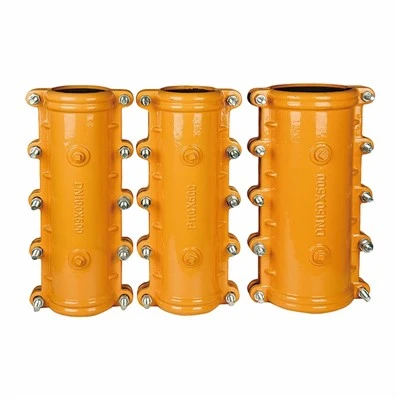
First, let’s define what a straight repair clamp actually is, for anyone who isn’t in the thick of pipe repairs. Unlike a slip coupling (which connects two new pipe sections to fill a gap) or a tapping sleeve (for adding a branch), a straight repair clamp is a banded, two-piece device that clamps around a damaged section of pipe, creating a watertight or airtight seal to stop leaks. It’s not designed to replace a section of pipe—it’s designed to patch, fast, without excavation or full pipe replacement. That makes it a go-to for emergency repairs, which is why contractors love it: a 20-minute fix is way better than a two-hour dig, especially if a water main break is flooding a downtown street.
Now, the idea of a “universal” clamp makes sense on paper. Wouldn’t it be great to keep a single inventory of clamps that fit every pipe you might encounter—carbon steel, cast iron, PVC, HDPE, even copper—any size, any damage? But pipe systems are messy. They evolved over centuries, from the cast iron mains of the 1950s to the PVC residential lines of the 1990s to the HDPE pipelines installed last year. Each material has different properties: cast iron is brittle, HDPE is flexible, PVC is rigid. Each size comes with its own tolerances. A 4-inch cast iron pipe isn’t the same diameter as a 4-inch PVC pipe, even if the nominal size matches. Add in manufacturing variances—some old cast iron pipes have thicker walls than newer ones—and suddenly a one-size-fits-all clamp that works on a PVC line won’t seal on an iron one.
I see this play out all the time with my own customers. Last month, a small plumbing contractor came to me panicking because he’d brought the wrong clamp for a job. He’d bought a 2-inch universal clamp from a big-box supply store, and it wouldn’t seal on a 2-inch cast iron pipe that had a 1/8-inch corrosion pit on the side. The universal clamp was designed for smooth, uniform pipe walls—something modern PVC and HDPE have—but cast iron has irregular, pitted surfaces that the clamp’s rubber gasket can’t conform to. That’s a key point: gaskets matter more than the clamp’s metal housing. A universal-style clamp usually uses a single flat rubber gasket, which works for smooth pipes, but if your pipe has damage, uneven walls, or is a non-ferrous material like copper, that flat gasket won’t create a consistent seal.
That said, there are clamps that work across a wide range of pipe types and sizes—they’re just not “universal” in the truest sense. I call them “multi-application straight repair clamps,” and they’re the workhorses of my inventory. These clamps have adjustable housing bolts, so they can expand or contract slightly to fit nominal pipe sizes within a range—say, 2.5 inches to 3 inches, instead of only exactly 3 inches. They also come with interchangeable gaskets: one for rigid pipes (cast iron, steel, PVC) with a flat surface, and a softer, thicker gasket for flexible pipes (HDPE, copper) that can bend slightly to conform to the pipe’s shape.
A 2021 study from the American Water Works Association (AWWA) backs this up. The study tested 17 different repair clamp models on six common pipe materials, from 1-inch to 12-inch diameters. The only clamp that passed all leak tests across every pipe type was a multi-application model with adjustable housings and interchangeable gaskets. Universal clamps that claimed to work on all materials failed 30% of the time, usually because the gasket couldn’t seal around corrosion or the clamp couldn’t tighten enough on a flexible HDPE pipe. That’s a big deal for municipalities, which have to repair hundreds of pipes a year with mixed materials—having a clamp that works on, say, a 6-inch steel main and a 6-inch HDPE lateral cuts down on inventory costs and emergency response time.
Another myth I hear a lot: “A straight repair clamp is a straight repair clamp—all brands are the same.” That’s not true, either. The quality of the housing material and the gasket make all the difference. Cheap clamps use galvanized steel housings that rust after a few years, or neoprene gaskets that break down when exposed to chlorine or other chemicals in water. My multi-application clamps use 304 stainless steel housing, which is corrosion-resistant for 50+ years, and EPDM gaskets that work with both potable water and industrial fluids. I’ve seen customers buy a cheap clamp for a $50 repair that failed 6 months later, costing them $5,000 in water damage. The right clamp, even if it’s not “universal,” will save you more in the long run.
Now, let’s talk about when you would and wouldn’t need a universal clamp. If you’re working on a uniform pipe system—say, a new subdivision built with all 4-inch PVC lines, or an industrial park with all 8-inch steel mains—you could technically use a size-specific clamp that fits that exact pipe, and that will be cheaper and more effective. But if you’re a contractor who works on residential, commercial, and municipal jobs, or a maintenance team that handles old and new pipes, a multi-application clamp is way more practical. You don’t have to carry 10 different clamps for 1-inch pipes, 10 for 2-inch, etc.—you can carry two or three multi-application clamps that cover most of your jobs.
There are also edge cases where even multi-application clamps won’t work. If your pipe is damaged so badly that the wall has a hole larger than half the pipe’s diameter, a straight repair clamp won’t cut off—you’ll need a full pipe sleeve or replacement. Or if you’re working on a pressurized gas line, some standards require a specific type of clamp designed for gas, not water, because the pressure and seal requirements are different. That’s why it’s always a good idea to check the pipe’s material, size, pressure rating, and the type of fluid it carries before picking a clamp.
I’ve been in this industry for 12 years, and I’ve seen too many people waste time and money chasing a “universal” clamp that doesn’t exist. The best advice I give to anyone shopping for straight repair clamps is to focus on the range of applications you actually work with. If you mostly fix 2- to 6-inch water and wastewater pipes across multiple materials, a high-quality multi-application clamp is the sweet spot. It’s not universal, but it will work for 90% of your jobs, and it’s built to last.
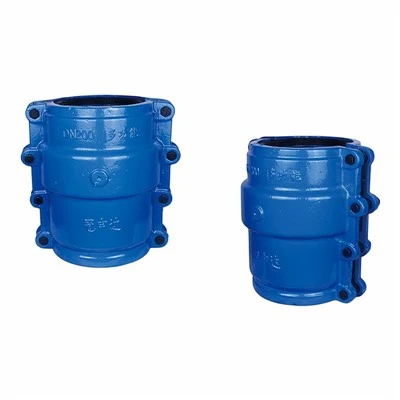
If you’re tired of ordering the wrong clamps, carrying too much inventory, or dealing with clamp failures on the job, let’s connect. I work with contractors and maintenance teams across all industries to find the right repair clamp for their specific needs, whether that’s a size-specific clamp for a uniform system or a multi-application clamp for mixed pipe types. Reach out to me to discuss your project requirements and get a tailored solution that works for you.
Bell End Repair Clamp References
- American Water Works Association. (2021). Evaluation of Repair Clamp Performance for Diverse Pipeline Materials. AWWA Research Foundation.
- National Association of Plumbing, Heating and Cooling Contractors (APHCC). (2022). Best Practices for Pipe Repair and Leak Sealing. APHCC Technical Bulletin.
- International Organization for Standardization (ISO). (2019). Specification for Pipeline Repair Clamps, ISO 23913:2019.
Fujian Fufa Valve Manufacturing Co., Ltd.
As one of the most professional straight repair clamp manufacturers and suppliers in China, we’re featured by quality products and good price. Please rest assured to buy durable straight repair clamp made in China here from our factory. Welcome to view our website for more information.
Address: Meilin Xikou Industrial Zone, Nan’an City, Quanzhou City, Fujian Province
E-mail: hongwenjin@fufafamen.cn
WebSite: https://www.fufavalve.com/
