Hey guys, it’s Jake here, your go-to guy for everything plastic bag making machines. Today I’m tackling a question I get at least three times a week from new clients: “Can a plastic bag making machine actually produce bags with a high-gloss finish?” Let me cut to the chase—yes, it totally can. But before you go dropping thousands on a machine and crossing your fingers for that shiny, magazine-worthy look, there’s a lot more to it than just flipping a “gloss switch.” Let me break this down like I would over a coffee at the trade show booth. Plastic Bag Making Machine
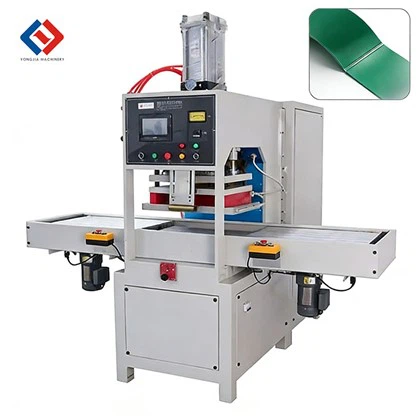
First, let’s get one thing straight: high-gloss finish isn’t just about how the bag looks when it’s off the machine. It’s a combination of materials, machine setup, and even post-processing steps that all work together. I’ve seen cheap machines crank out super glossy bags that peel within a week, and top-tier machines that struggle because someone used the wrong raw material. So let’s start with the basics: what makes a plastic bag glossy in the first place? Think of it like polishing a car. If the metal (or in this case, plastic film) is smooth, clean, and free of imperfections, the light bounces off it evenly, creating that shiny finish. If the film is grainy, has scratches, or is contaminated with dust, you’ll get a dull, spotty bag no matter what your machine does.
Now, as a machine supplier, I’ll tell you the machine is only half the battle. The other half is the film you feed into it. For high-gloss bags, we’re mostly talking about LDPE (low-density polyethylene) or LLDPE (linear low-density polyethylene) films—wait, no, not just any LDPE. We’re talking about cast film, specifically. Blown film, which is what a lot of lower-end machines use, has a little texture from the blowing process, even if it’s thin. Cast film is extruded through a flat die, cooled evenly on a chrome roller, and that’s where the smoothness comes from. If your machine doesn’t have a precise temperature control for those cooling rollers, the film might cool unevenly, leading to waviness or a dull spot. I remember a client who brought his own blown film to test on my machine, and we couldn’t get a glossy finish—switched him to cast film, and boom, his bags were shinier than he’d ever seen. That’s the first lesson: match your film type to your machine’s capabilities.
Next, the machine components that directly affect gloss. Let’s talk about the forming parts of the bag making machine. The seals, the cutting blades, the folding rollers—all of these have to be perfectly smooth. If a roller has a slight scratch, it’ll leave a mark on the film every time it passes. Cheap machines often use rubber rollers that get rough after a few months of use; premium machines use chrome-plated or silicone-coated rollers that stay smooth for years. Also, the pressure from those folding rollers is key. Too much pressure and you’ll stretch the film, causing it to thin out and lose gloss. Too little pressure and the bag will be creased, which kills the shine. I always tell my clients to adjust the roller pressure gradually, testing with a scrap film first—don’t just crank it to max because you want the bag to look “tight.”
Then there’s the printing part, if you’re printing on the bags. A lot of people think that printing will ruin the gloss, but actually, if done right, it can enhance it. Flexo printing is the most common for plastic bags, and modern flexo machines use anilox rolls that apply just the right amount of ink. If the anilox roll has too many cells, it’ll deposit too much ink, making the area dull. Too few cells and the ink will be thin, leading to smudges. For high-gloss bags, we recommend using UV-curable inks, too—these dry instantly with UV light, so there’s no smudging, and they have a shiny finish right off the press. I had a small grocery bag company come to me last year; their old machine used water-based inks, and their bags looked matte even when the raw film was glossy. Switched them to UV inks on their existing machine, and their sales went up 15% because their bags stood out on store shelves. That’s a big win from a machine adjustment, not a whole new setup.
Wait, let’s not skip over the cleaning and maintenance part. I can’t tell you how many clients call me saying their bags have suddenly gone dull, and the first thing I check is how often they clean their machine. Dust and plastic residue build up on the rollers, the die, and even the guides over time. That residue creates a layer between the film and the machine’s components, so the film doesn’t get the smooth contact it needs. A client in Texas had this problem—his machine was running 24/7 for three months without a deep clean. We pulled the chrome cooling roller and there was a thin layer of old LDPE gunk on it. We cleaned it with a special solvent (I always provide that to my clients, by the way) and after running the film through, his bags were glossy again. Moral of the story: routine maintenance isn’t just for keeping the machine running—it’s for keeping that gloss.
Now, are there any myths I need to bust here? Yeah, a big one: people think you need a super expensive machine to get high-gloss bags. That’s not true. I’ve sold mid-range machines to small businesses that produce high-gloss stand-up pouches for local brands, and entry-level machines to people who make glossy bread bags for bakeries. The key is matching the machine’s features to your needs. If you’re making 10,000 bags a month, you don’t need a $50,000 fully automatic line with all the trimmings—you just need a machine with precise cooling rollers and smooth folding components. If you’re making 100,000 a month, you might want to invest in a machine that has in-line printing, so you don’t have to send the film out to another printer, which can dull the finish from handling.
Another myth: the thicker the film, the glossier the bag. No, that’s backwards. Thicker film is harder to stretch evenly, so it might have more texture. The sweet spot for high-gloss is usually 10 to 30 microns for LDPE/LLDPE. Thinner than that, it’s too flimsy and might tear; thicker, and it loses that smooth, shiny surface. I always advise clients to test a few different film thicknesses on their machine before committing to a bulk order—most suppliers will let you run a small test run for a low cost, which is way cheaper than buying a whole roll of film that doesn’t work.
Let me also talk about edge cases, like special finishes. What if someone wants a metallic gloss or a pearlescent gloss, not just a regular shiny? Can the machine do that? Absolutely—you just need a special film. Metallic film has aluminum particles embedded in it, so when it’s run through a smooth machine, those particles align evenly, creating that mirror-like shine. Pearlescent film has tiny mica particles, and again, the machine’s smooth rollers help those particles spread out uniformly. I worked with a promotional products company last year that wanted metallic bags for trade show giveaways—we had them run the metallic film through one of our semi-automatic machines, and the bags looked so good, they won a design award. They were using the same machine they’d had for five years, just a different film and adjusted the temperature a little.
Now, let’s get into the common mistakes I see new buyers make. First, not asking their machine supplier about gloss capabilities. A lot of cheap machine sellers will say “our machine makes any bag” but don’t have the precision to get a high-gloss finish. When you’re shopping for a plastic bag making machine, ask the supplier: “Can this machine produce high-gloss bags? What components do I need to adjust?” If they can’t give you a clear answer, keep looking. Second, not ordering test runs. I can’t stress this enough—run a test with your desired film, maybe with a small print run, before you buy the machine. That way, you can see if the gloss is what you want, and if not, you can adjust settings instead of being stuck with a machine that doesn’t work for you. Third, skipping maintenance. Like I said earlier, a machine that’s well-maintained will keep producing glossy bags for years, while a neglected machine will start turning out dull bags within months. I send all my clients a free maintenance guide when they buy a machine, and I remind them every quarter to do a deep clean.
Wait, what about eco-friendly plastic bags? A lot of people are switching to biodegradable plastics these days, and they ask if those can have a high-gloss finish too. The short answer is yes, but they’re trickier. Biodegradable films (like PLA or PBAT) are less flexible than regular LDPE, so they’re more prone to creasing, which ruins gloss. But with a machine that has adjustable tension controls, you can run biodegradable film and get a glossy finish. I had a client in California who makes compostable produce bags—he was struggling with dull bags until he adjusted the tension on his machine’s rollers. Now his bags are just as glossy as regular plastic, and his customers love that they’re eco-friendly. That’s a big market right now, so if you’re in that space, don’t count out high-gloss just because the film is biodegradable.
Let me wrap this up with a few key takeaways so you don’t have to remember every detail. First: high-gloss bags are possible with the right machine, film, and setup. You don’t need a top-of-the-line machine, but you do need one with smooth components and precise temperature/pressure controls. Second: film is just as important as the machine. Cast LDPE/LLDPE is your best bet for glossy bags, and match the thickness to your production needs. Third: maintenance and minor adjustments make a huge difference. Clean your machine regularly, adjust roller pressure and tension, and don’t be afraid to tweak settings to get that perfect shine. Fourth: even biodegradable or printed bags can have a high-gloss finish if you pair the right materials with the right machine setup.

If you’re in the market for a plastic bag making machine and you want to make those eye-catching high-gloss bags, hit me up. Whether you’re a small startup looking for your first machine or a established company wanting to upgrade your line, I can help you pick a machine that fits your needs and budget, and walk you through all the steps to get that shiny finish you want. Don’t waste time or money on machines that can’t deliver—let’s chat and make sure your next line of bags is the shiniest on the shelves.
Urine Bagblood Bag Production Line References:
- Plastic Film & Bag Association. (2022). "Gloss and Surface Finish in Plastic Packaging." Industry Technical Report.
- Zhang, L., et al. (2021). "Effect of Cast Film Processing Parameters on Surface Gloss of LDPE/LLDPE Blends." Journal of Applied Polymer Science, Vol. 138, Issue 24.
- Trade Machine Association. (2023). "Maintenance Best Practices for Plastic Bag Manufacturing Equipment." Equipment Maintenance Guide.
- Eco Packaging Alliance. (2022). "Biodegradable Plastic Film Processing and Finish Characteristics." Sustainable Packaging Technical Bulletin.
Dongguan Yongjia Machinery Equipment Co., Ltd.
We are one of the most reliable plastic bag making machine manufacturers and suppliers in China, specialized in providing high quality customized service. Please feel free to wholesale advanced plastic bag making machine at low price from our factory. For quotation, contact us now.
Address: No. 240, Chashan South Road, Chashan Town, Dongguan City, Guangdong Province, China
E-mail: info@yjwelding.com
WebSite: https://www.yjhighfrequencymachine.com/
