Hey guys, if you’ve ever shopped for LED high bay lights for your warehouse, manufacturing plant, gym, or any big open space, you’ve probably stared at the price tag and thought “wait, that’s such a big gap between the cheapest and most expensive one!” As someone who’s been supplying these lights for years, I get it—so many people hit me up asking straight up, “what’s the actual price range? And why is it so messy?” Let me break this down, no fancy jargon, just real talk from someone who’s been in the thick of LED high bay sales for ages. LED High Bay Light
First off, let’s get one thing straight: LED high bays aren’t your $10 porch lights. These are built for spaces that are 20 feet or higher—think 20-foot warehouse ceilings, 30-foot manufacturing floors, even big box stores or ice rinks. The price doesn’t just pop out of nowhere; it depends on a bunch of factors, and that’s why the range is so wide. I’ve seen them go from under $50 to over $500 each, and yeah, I’ve heard people ask why a $100 difference even exists for two lights that look almost the same. Let’s dive into why, starting with the big-ticket factor: quality of parts.
The core of an LED high bay is three main parts: the LED chips, the driver (that’s the thing that regulates power, keeps the light from flickering out), and the housing (the metal casing that dissipates heat, which is super important for LED lifespan). Cheap lights use generic LED chips from no-name factories in China, drivers that don’t have surge protection, and thin plastic or cheap aluminum housings that overheat in 6 months. I’ve had customers tell me they bought a batch of 100 $40 lights for their warehouse, and half died within a year because the drivers burnt out in the summer heat. Compare that to a light with top-tier chips from brands like Samsung or Cree, a Mean Well driver (the gold standard for reliability), and a heavy-gauge aluminum housing that keeps chips cool. Those parts cost way more upfront, but they last 50,000 to 100,000 hours vs. 10,000 to 20,000 hours for cheap ones. That’s why a good light will cost more, but you don’t have to replace it every couple years.
Next up is wattage and lumens, which ties directly to how bright you need the space. Wattage is power, lumens are actual brightness (not the same thing, but more or less for this convo). A small 100W LED high bay might put out 10,000 lumens, good for a small warehouse or office break room with a high ceiling, and those usually fall in the $50 to $150 range. A 200W light is 20,000 lumens, perfect for a standard 25-foot warehouse or manufacturing line, and those run from $120 to $250. Then you get into the big boys: 300W to 500W lights for 30+ foot ceilings, like distribution centers or gyms with high basketball hoops, and those can hit $200 to $550 each. A lot of people make the mistake of buying a lower wattage light to save money, but then the space is dim, so they have to add more lights, which ends up costing more in the long run. I had a customer a few months back who bought $80 200W lights for his 30-foot warehouse, and he needed two per bay instead of one, so he spent more total than if he’d just bought the $200 300W lights that give enough brightness with one per bay.
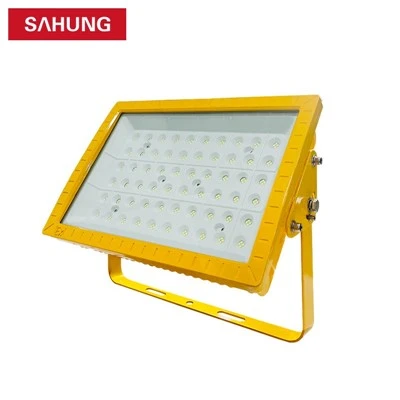
Then there’s extra features, which add cost but might be worth it for you. Dimmable lights are great for spaces like gyms where you might not need full brightness for a group class or after hours, and those usually add $20 to $50 to the price. Motion sensors? Perfect for warehouses that only need light when someone’s moving around, that cuts down on electricity bills, and those add $15 to $40. Explosion-proof lights are a must for places with flammable materials, like chemical plants or grain silos, and those are way more expensive—like $300 to $700 each, because they have to meet strict safety standards. Solar-powered high bays are another niche, great for remote construction sites or areas without easy power access, and those can run $300 to $600, since they have a built-in panel and battery. Also, if you need more durable lights for harsh environments—like food processing plants where they get hosed down constantly, or cold storage warehouses that are below freezing—you’ll pay a bit extra for IP65 or IP67 waterproof ratings, which add $10 to $30 per light.
Wait, let’s not forget about bulk vs. individual pricing. That’s a huge one I see so many new buyers miss. If you’re just replacing 2 lights for a small storage shed, yeah, you’ll pay full retail—like $60 to $120 per light for a decent one. But if you’re a contractor buying 50 for a new warehouse, or a facility manager buying 200 to upgrade your entire manufacturing floor, the price per light drops hard. I’ve seen bulk orders take $50 off per light for 50 units, and up to $150 off for 200 or more. That’s why so many small business owners come to me first before buying—they think they can save by buying a few cheap ones, but bulk discount plus long lifespan makes the better light way cheaper over 5 years.
Now, let’s talk about common price ranges so you can get a real idea, not just vague numbers. Let’s break it down by use case, because that’s what most people care about:
-
Budget options (under $100 each): These are the cheap, no-name lights, made for temporary use or spaces where you don’t care about long lifespan, like a pop-up event or a garage you only use part-time. Their downside? They last 1-3 years, might flicker, and draw more electricity because they’re not efficient. I always warn customers not to use these for warehouse or main manufacturing spaces—they end up paying more in replacement costs.
-
Mid-range ($100 to $250 each): This is the sweet spot for most people. These use decent chips, reliable drivers, last 5-7 years, put out enough brightness for 20-30 foot ceilings, and have optional features like dimming or motion sensors. Most small to medium warehouses, gyms, and retail stores fall here. This is what I sell most, because it’s a good balance of cost and performance.
-
High-end ($250 and up): These are for big spaces, harsh environments, or long-term use. Top-tier chips, industrial-grade drivers, explosion-proof or waterproof ratings, 8+ year lifespan. Distribution centers, chemical plants, cold storage, large gyms—these are the ones that make sense here. A lot of big chain stores stick to this range because they don’t want to replace lights every few years across hundreds of locations.
Wait, but let’s clear up a myth: more expensive doesn’t always mean better. I’ve had customers come to me with a $500 light that was broken, because they bought it for a niche feature they didn’t actually need. And I’ve had customers who got a $120 mid-range light that’s been running flawlessly for 4 years in their warehouse. It’s all about matching the light to your space. If you need a light for a 20-foot garage, don’t buy a $400 explosion-proof one. If you need lights for a 35-foot distribution center, don’t buy a $50 budget one.
Another thing to factor in is installation and warranty. A lot of cheap lights don’t come with a warranty, or only have a 6-month warranty. Mid-range and high-end lights usually have a 3-5 year warranty, some even up to 10 years. That’s a big deal—if a light breaks within the warranty period, you just send it back and get a new one, no extra cost. I’ve had customers save thousands because they bought a light with a 5-year warranty vs. a cheap one with no warranty that broke after 1 year, forcing them to pay for a replacement and installation twice.
Let me give you a real example from last month. A manufacturing plant manager hit me up, saying he’d bought 100 lights from another supplier for $75 each. Within 6 months, 30 of them died, and the rest were dim because the chips were low quality. He came to me, and I showed him our mid-range 200W lights for $130 each, with a 5-year warranty. We worked out a bulk discount, so he paid $110 each, which is $35 more per light than the cheap ones, but he didn’t have to replace 30 for $2,250, and these will last 5 years minimum. Over 5 years, his total cost would be $11,000 vs. $7,500 for the cheap ones plus $2,250 in replacements, that’s $1,250 more? Wait no, wait—wait he had to pay for installation too. The cheap ones take like an hour to install per light, the good ones are similar, but he’d already paid for installation on the first bad ones, so he had to pay to take those down, install new ones, then install the replacements for the dead ones. By the end, he was way ahead with the better light.
So what’s the takeaway here? The price range of LED high bay lights is really $50 to $550 per light, but that doesn’t mean you should just pick the cheapest or most expensive. You need to think about your ceiling height, how long you want the lights to last, any special features you need, and how many you’re buying. If you’re just a small business owner looking to upgrade your warehouse, don’t overspend on a high-end explosion-proof light you don’t need, and don’t go for the $40 one that’ll die in a year.

If you’re still confused about what’s right for your space, hit me up. I can help you figure out exactly how many lumens you need, what wattage is best, and work out a bulk price that makes sense for your order. No pressure, just honest advice from someone who’s been doing this for years and doesn’t want you to waste money on the wrong lights.
LED Explosion Proof Light References:
- U.S. Department of Energy. (2023). Energy Savings and Lighting Technology: LED Commercial Applications. Retrieved from industry energy efficiency reports on LED commercial lighting performance and cost benchmarks.
- Illuminating Engineering Society (IES). (2022). Lighting Handbook: LED High Bay Light Specifications for Industrial and Commercial Spaces.
- Global Market Insights. (2024). LED High Bay Lights Market Report: Product Cost Analysis by Wattage, Application, and Quality Grade.
Hangzhou Shanghong Electronic Technology Co., Ltd.
We are one of the most experienced led high bay light manufacturers and suppliers in China. With a professional production team, we offer a wide range of products with superior quality. Please feel free to wholesale custom made led high bay light from our factory.
Address: 5F, Building A, No.7 Xiyuan 2nd Road, Xihu District, Hangzhou City, Zhejiang, China.
E-mail: sales3@sahung.com
WebSite: https://www.sahung-light.com/
