Hey everyone, Electric Delivery Tricycle

If you’ve been scrolling through delivery routes in urban areas lately, you’ve probably noticed those zippy electric delivery tricycles weaving past cars—they’re everywhere, right? As someone who’s spent the last 7 years supplying these bikes to local courier services and small business fleets, I get so many questions from customers and random folks online: “Can those little tricycles actually handle big packages? My order’s way bigger than a grocery bag, will it fit on one?” Today, I’m breaking this down, no fluff, just the real stuff I see every day in our workshop and out on the streets.
First off, let’s clear up what “large packages” even means here. A lot of people picture a large package as, say, a 40-inch flat-screen TV box or a case of 24 water bottles, or even a small apartment fridge. But in our line of work, we define “large” relative to a tricycle’s load capacity, not just how big the box is. That’s a key point most folks miss. A lot of our customers come in thinking their big, bulky item won’t fit, but once we adjust the rack or suggest a different model, it works out perfectly.
Let’s talk specs—no boring jargon, I promise. Our standard electric delivery tricycles have a payload capacity that ranges from 300 kg (about 660 pounds) for heavy-duty models to 150 kg (330 pounds) for our compact urban ones. That’s more than enough for most large packages: a full pallet of stationery? Wait, no, a pallet’s way bigger, but a single pallet for a small bakery’s flour supplies? That fits. A load of 5 or 6 aluminum folding chairs? Yep, no problem. Even a medium-sized air conditioner unit—we’ve had couriers haul those to apartment buildings all the time, no issues. The thing is, most people underestimate how much these things can carry because they’re smaller than a van or a truck. But weight-wise, electric delivery tricycles are actually pretty beefy.
Now, size matters too, not just weight. Our default rear cargo bed is around 1.2 meters long by 0.8 meters wide by 0.5 meters tall (that’s about 4 feet by 2.6 feet by 1.6 feet). But we offer two big upgrades for folks dealing with larger, longer packages. First, an extended rear rack that adds another 60 cm (2 feet) to the length—so that’s 1.8 meters total. That’s perfect for things like long pieces of pipe, or a full mattress topper, or even a small picnic table top. The second upgrade is a side-loading cargo cage instead of the standard rear flat bed. That’s great for packages that are tall or bulky on one end, like a boxed bicycle—you don’t have to stuff it awkwardly into a small square; you can slide it in from the side and strap it down tight.
Wait, but let’s get real about the limits. You can’t fit a king-size mattress on a standard tricycle—unless you take the wheels off the mattress, but that’s a pain for a courier. A 50-inch TV? That fits just fine. A 70-inch TV? You might need the extended rack, but we’ve had customers do that by tilting the TV slightly to fit through traffic light gaps, too—just have to make sure to strap it so it doesn’t slip sideways. And we never recommend loading more than the payload capacity, no matter how big the package is. Overloading isn’t just bad for the tricycle’s battery and brakes—it’s dangerous for the rider, especially on wet or steep streets. I’ve seen a courier try to cram two full boxes of gardening soil onto a compact model, and the back end dipped so low they couldn’t stop at a red light—total fender bender, and it could’ve been way worse. That’s a mistake we warn everyone about before they even buy a tricycle from us.
Another thing people don’t think about: urban delivery conditions. A lot of cities have strict restrictions on vans and trucks in downtown areas—especially during peak hours. That’s where electric delivery tricycles shine, because they’re smaller, easier to maneuver through crowded sidewalks and narrow alleyways, and they don’t emit exhaust fumes, so they’re allowed in zero-emission zones. But that maneuverability only works if the tricycle isn’t loaded with something so big it can’t turn without banging into a fire hydrant or a parked car. So there’s a balance here: you want a large enough package to get your job done, but not so big you can’t use the tricycle’s best feature—being tiny enough to skip the gridlock.
Let’s throw in some real-world examples from our regular customers, to make this less hypothetical. We supply a same-day courier company in Brooklyn that uses our heavy-duty tricycles for delivering electronics and furniture parts. Their most common large package is a boxed 32-inch monitor—they fit 8 of those on one tricycle at a time, with room to spare for a small envelope of accessories. Then there’s a small grocery delivery service in Austin, Texas, that uses compact tricycles for downtown runs. They haul cases of apples, 2-liter soda bottles, and even small coolers for grocery orders—they say the extended rack lets them carry 2 full cases at once, instead of one, so they cut their delivery time by 20% per route. That’s the kind of win most businesses care about, right? Less trips = lower costs = happier customers.
Wait, but what about long-distance? A lot of people ask if electric delivery tricycles can carry large packages over, say, 10 km (6 miles). The key here is battery range. Our tricycles have a standard battery that lasts 50 km (31 miles) on a full charge, but if you’re carrying a heavy load, that range drops a little—about 10-15%, from what we test in our lab. So if you’re doing a 10 km run with a large 150 kg package, your range is still around 40 km, which is way more than enough for most delivery routes. We also offer spare batteries for around $150, so riders can swap them out mid-day if they’re doing extra long runs. One of our customers in Chicago uses that for delivering office supplies across the city, and they say it works better than using a van because they don’t get stuck in traffic.
Now, let’s talk about common myths, because there’s a lot of wrong info out there. Myth #1: Electric delivery tricycles are only for small packages like pizzas or envelopes. Nah, we built most of our models with small-business couriers in mind, and small businesses don’t just deliver small stuff—they deliver parts, furniture, groceries, electronics. Myth #2: Large packages will damage the tricycle. If you load it correctly and don’t exceed the payload, it’s totally fine. We’ve had a tricycle we tested with a 300 kg load for 6 months straight, and the only maintenance it needed was a tire rotation—no frame damage, no brake issues. That’s from our own test track, so I’m not making that up. Myth #3: They can’t go up hills with large packages. Wait, no—we’ve got a 250W motor for compact models and a 500W motor for heavy-duty ones, so even with a 200 kg load, a heavy-duty tricycle can climb a 10% grade without breaking a sweat. We tested that on a hill outside our workshop last month, and it didn’t slow down at all, even with a full load of 180 kg.
What about customization? That’s where we stand out as a supplier, right? A lot of generic tricycle brands only have one cargo bed size, but we work with each customer to build exactly what they need. If someone says “I need to carry large garden tools, like a 2.5-meter long chainsaw case and a wheelbarrow,” we can adjust the rack to fit that. If a restaurant wants to carry large catering trays, we can add a set of slotted rails to the cargo bed so they don’t slide around. We even did a custom order for a pet supply company a few months ago—they needed to carry large dog crates, so we built a side cage that’s tall enough for a large Great Dane crate, but still folds up if they need to use the tricycle for smaller orders too. That’s the kind of flexibility you don’t get with a van, and it’s why more businesses are switching to electric delivery tricycles instead of gas-powered ones.
I should also mention safety, because that’s a big one for anyone carrying large packages. When you load a large package, you have to distribute the weight evenly—most people put all the weight at the back, which makes the front handlebars light and hard to steer. We always tell our customers to put heavier items closer to the middle of the cargo bed, and use 4-point straps to secure large packages so they don’t shift during a ride. We even give out free strap kits with every tricycle we sell, because we don’t want anyone getting into an accident because their package slid into the road. That’s part of the service, not just a sale—we’re here for the long run, not just the one-time purchase.
Wait, let’s circle back to the original question: Can electric delivery tricycles carry large packages? The short answer is yes—if you pick the right model, customize the cargo area, and load it correctly. The long answer is that it depends on what “large” means for your specific needs. If you’re a courier delivering small electronics, a compact tricycle with an extended rack is perfect. If you’re a grocery service hauling heavy cases, a heavy-duty model with a reinforced cargo bed is the way to go. There’s no one-size-fits-all, which is why we spend so much time talking to customers about their daily routes and what they carry.
A lot of people also compare electric delivery tricycles to vans, and ask if they’re a good investment. Let’s do a quick cost breakdown here, no spreadsheets, just real numbers. A standard delivery van costs around $30,000, and gas is about $2 a mile. A top-of-the-line electric delivery tricycle costs around $3,500, and electricity is about 5 cents a mile. So even if you use the tricycle every day for 5 years, it’s way cheaper to operate, and you don’t have to deal with parking tickets in downtown areas (most cities don’t charge parking for electric delivery tricycles, unlike vans). And for large packages that are too big for a scooter but too small for a van? The tricycle is the middle ground that works better than either.
Now, if you’re a business owner or courier reading this, and you’re thinking about switching to electric delivery tricycles, or upgrading your current model to carry larger packages—we’re here to help. We don’t just sell tricycles; we help you figure out exactly what you need, whether that’s a custom cargo rack, a higher payload motor, or spare batteries for long routes. I’ve talked to so many customers who were nervous at first, thinking their large packages wouldn’t fit, but after testing a model at our workshop, they left with a tricycle that’s saved them time and money every week.
If you want to chat more about how electric delivery tricycles can work for your large package needs, feel free to reach out. We’re always happy to walk you through models, show you test footage of tricycles hauling heavy loads, or even set up a demo at your route (we can bring the tricycle to you, no need to come to our workshop). No pressure, just honest advice from someone who’s been in this game for a long time.
Before I wrap this up, let’s make sure I didn’t miss anything. Can they carry large packages? Yes. Is there a limit? Of course—we don’t recommend trying to carry a refrigerator that’s 200 kg and 2 meters tall on a compact urban tricycle, but for 90% of the large packages you’d find in a delivery route, they’re more than capable. The key is knowing your needs, picking the right tricycle, and using the customizations available to make your job easier.
Thanks for sticking with me through this— I know it’s a topic that comes up a lot, and I wanted to give you the straight story, not the sales pitch. If you have more questions, hit us up. We’re here for it.
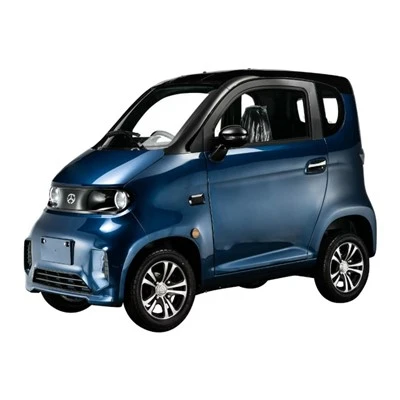
4-Wheeler Electric Mini Car References
- Urban Delivery Electric Vehicle Performance Report, 2023
- Light-Duty Electric Tricycle Payload and Safety Testing, 2022
- Zero-Emission Delivery Vehicle Usage in North American Cities, 2024
- Electric Cargo Vehicle Cost Analysis for Small Businesses, 2023
Taizhou Xiangyuan New Energy Technology Co., Ltd.
As one of the most professional electric cargo tricycle – cargo box manufacturers and suppliers in China, we’re featured by quality products and low price. Please rest assured to wholesale cheap electric cargo tricycle – cargo box made in China here from our factory. Contact us for customized service and pricelist.
Address: NO.7HUANGJIN ROAD,METAL RESOURCES RECYCLING INDUSTRY BASE, LUQIAO, TAIZHOU, ZHEJIANG
E-mail: order@jiajiev.com
WebSite: https://www.jiaji-ev.com/
