Hey there! I’m a supplier of Paulownia wood boards, and I’ve been in this business for quite a while. Today, I wanna chat about the processing difficulty of Paulownia wood boards. Paulownia Wood Board

First off, let’s talk about what Paulownia wood is like. Paulownia is a fast – growing tree, which is pretty cool. Its wood is light, with a relatively low density. This lightness can be both a plus and a challenge during processing.
One of the main processing difficulties is drying. Paulownia wood has a high moisture content when it’s freshly cut. If you don’t dry it properly, it can warp, crack, or develop mold. And let me tell you, getting the drying process right is no easy feat. You can’t just throw it in a dryer and hope for the best. The drying rate needs to be carefully controlled. If it dries too quickly, the outer layer will dry and shrink while the inner part is still wet, causing internal stresses that lead to cracks. On the other hand, if it dries too slowly, there’s a risk of mold growth. We usually use a combination of air – drying and kiln – drying. Air – drying is the first step, where we stack the boards in a well – ventilated area for a few weeks. Then, we move them to a kiln, where we can precisely control the temperature and humidity. But even with all these steps, it still takes time and patience to get the moisture content down to the right level, usually around 8 – 12%.
Another challenge is cutting. Paulownia wood has a relatively soft texture. While this might seem like an advantage, it can actually make cutting a bit tricky. When using sharp cutting tools, the wood can sometimes tear or splinter, especially if the grain is not straight. To deal with this, we have to use the right kind of saw blades. For example, a blade with a high tooth count can help reduce splintering. Also, we need to pay attention to the cutting speed. If the speed is too fast, it can cause more damage to the wood. And when we’re cutting thick boards, we have to be extra careful to ensure a clean cut.
Gluing is also a pain point. Because of the wood’s low density and porous nature, it can be difficult to get a strong glue bond. The glue has to penetrate the wood fibers effectively, but sometimes the pores can be too large, and the glue might not hold as well as we’d like. We’ve experimented with different types of glues, and it turns out that some special – formulated wood glues work better. But even then, we have to make sure the surfaces are clean and properly prepared before gluing. Any dust or debris can interfere with the bonding process.
Sandpapering Paulownia wood is also a bit of a hassle. The softness of the wood means that it can easily get scratched or gouged during sanding. We have to start with a relatively coarse sandpaper to remove any rough edges or unevenness, but then we need to switch to finer grits to get a smooth finish. And we have to be really gentle when sanding, or we might end up with an uneven surface.
Now, let’s talk about shaping. Paulownia wood can be shaped into various forms, but it requires skill. For example, if we’re making curved pieces, we have to use steam bending techniques. This involves heating the wood with steam to make it more flexible so that we can bend it into the desired shape. But the steam bending process is very delicate. If the wood is heated for too long or at too high a temperature, it can lose its strength. And if it’s not heated enough, it won’t bend properly.
Surface finishing is another area where we face difficulties. Paulownia wood has a light color and a relatively open grain. When applying finishes like paint or varnish, we have to be careful. If the finish is not applied evenly, it can look patchy. Also, because of the wood’s porous nature, it can absorb the finish unevenly, which can affect the final appearance. We often have to apply multiple coats of finish and sand between each coat to get a smooth and consistent look.
Despite all these processing difficulties, Paulownia wood boards have a lot of advantages. They’re lightweight, which makes them easy to handle and transport. They’re also environmentally friendly because Paulownia trees grow quickly. And they have a beautiful natural grain that looks great in furniture, flooring, and other wood products.
If you’re in the market for Paulownia wood boards, don’t let the processing difficulties scare you. We’ve got the experience and expertise to overcome these challenges and provide you with high – quality boards. Whether you’re a furniture maker, a builder, or just someone looking for a unique wood product, we can work with you to meet your needs.
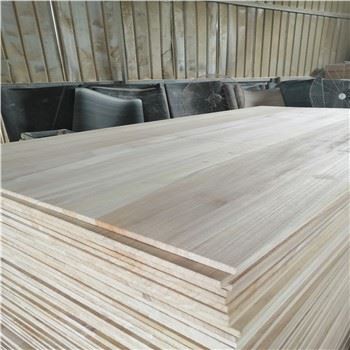
So, if you’re interested in purchasing Paulownia wood boards, just reach out to us. We’re always happy to have a chat about your requirements and provide you with a quote. Let’s work together to create something amazing with Paulownia wood!
Fitness References:
- Wood Technology: Principles and Applications by Bruce Hoadley
- Handbook of Wood Chemistry and Wood Composites edited by R. Rowell
Cao County Hengyu Woods Co., Ltd.
Cao County Hengyu Woods Co., Ltd. is one of the leading paulownia wood board manufacturers and suppliers in China. We warmly welcome you to wholesale customized paulownia wood board at low price from our factory. Good service and cheap products are available. For free sample, contact us now.
Address: Cao County, Heze City, Shandong Province, China
E-mail: anna@hengyuwood.com
WebSite: https://www.hengyuwooden.com/
